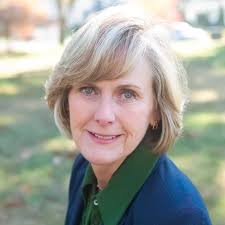

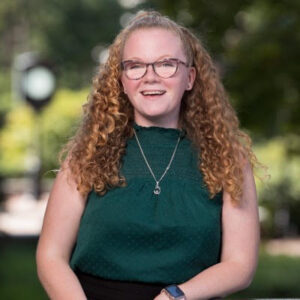
Meet Alumna Siobhan Kiernan ’21, Leadership Annual Giving Officer at Holy Cross

Name: Siobhan Kiernan

Class Year: 2021

Title: Leadership Annual Giving Officer

Organization: Holy Cross


1. In one sentence, what does your job entail?

I connect with alumni, families, and friends of the College to build meaningful relationships and align their philanthropic interests with opportunities that support Holy Cross and its students.


2. What planned and unplanned events connected you to your industry and your first employer after Holy Cross? How did you learn/decide it was a good fit for you? 

As a first-generation college student majoring in economics, I fully planned to work in finance. I hadn’t fleshed out where in Finance, but all sights were set on Wall St., and if that failed, I’d go teach Math. Then came my junior year and with it, the COVID-19 pandemic, forcing me to spend a great deal of time, like many others, online and with my thoughts. I decided then that I would never want to teach online, and that life was too short to be spent going through spreadsheets. It was during this period that Prof. Boyle, from the economics department, encouraged me to discern more, and asked if I had ever thought about development. I hadn’t, but after some research and informal conversations with the HC Advancement team, I felt pulled in this direction.


3. What were you involved in when you were on campus?

I sang in the College Choir, Chapel Choir, and Off the Record. I was also a tutor in the Economics Department and a Campion Cookie Baker.


4. What was your major and how did it affect your career decisions?

Economics! Economics is the study of how people act/behave with limited resources (money, time, etc.) to maximize enjoyment. In my role, I am assisting individuals who are interested in financially supporting Holy Cross, who have limited resources…It’s funny—I wouldn’t say that studying economics necessarily shaped or affected my career path. Rather, it was my experience within the department and the relationships I built that had the greatest impact. One economics professor, in particular, encouraged me to pursue a career in development, and my experience at Holy Cross was so meaningful that fundraising for this place feels like second nature.


5. What are one or two skills that you developed at Holy Cross that you use in your work?

Time management and comprehensive problem-solving. Holy Cross is incredibly rigorous, so if you want to take advantage of all you can in your 4 years and stay above ground academically, you’ve got to learn how to juggle a variety of priorities. This is definitely still the case now, especially when you are managing a range of expectations, deadlines, donors, etc. Additionally, the ability to think creatively and comprehensively about obstacles is incredibly useful. Going to a Liberal Arts school and taking courses across an assortment of disciplines simply prepares you to ask questions and think holistically when faced with a problem. Sometimes I analyze an obstacle like an economist, considering incentives and outcomes; other times I approach it like a historian, looking for context and patterns. The ability to think differently has been invaluable in navigating challenges and developing solutions.


6. What advice do you have for students on campus today?

Make the most of your time! Four years feel like a long while, but it’ll go by before you know it. You’re in a community surrounded by some incredibly impressive peers. It’s a period of time unlike any other, so take advantage of all that you can. And with that, try new things and embrace your mistakes (they are definitely not that deep).


7. What are your thoughts on how AI has impacted or will impact your industry? What advice do you have for students as they prepare to enter a professional world where AI is prevalent?

I have a strong belief that our work is very people-centric. Philanthropy is incredibly emotional; sometimes those decisions involve children, parents, etc. I am proud to work with the alumni I do, know their stories, passions… and I don’t think AI can simply replace that. Now, do I think AI can help in alleviating some administrative tasks? Absolutely! I think of it as a tool to save time, but when I meet with a donor, its person to person.
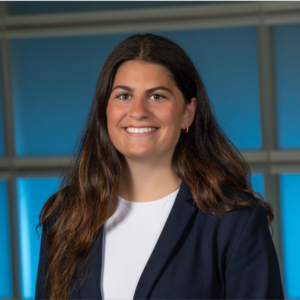
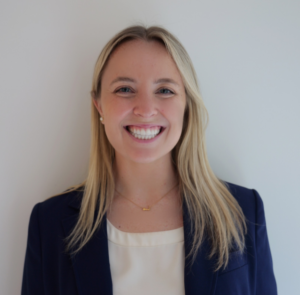
Meet Alumna Coley Leo ’26, Graduate Student in Notre Dame ESTEEM Program


Name: Coley Leo

Class Year: 2026

Title: Graduate Student

Organization: Notre Dame ESTEEM Program (M.S. Engineering, Science, and Technology Entrepreneurship)


1. In one sentence, what does your job entail?

Using STEM background to shape business and entrepreneurial ideas.


2. What planned and unplanned events connected you to your industry and your first employer after Holy Cross? How did you learn/decide it was a good fit for you? 

I found ESTEEM through the Holy Cross Center for Career Development, when there were ESTEEM office hours held. I knew I wanted to attend graduate school and shift my career from a science heavy background to a more business/ people-facing career. The ESTEEM program was the perfect way for me to approach my career goals while still using the analytical and science background I gained at Holy Cross.


3. What were you involved in when you were on campus?

Athletics (Field Hockey)
Student Technology Advisory Committee
Working for Worcester
Academic Internship Program
Peer Career Advisor


4. What was your major and how did it affect your career decisions?

Chemistry and Statistics, strengthened my analytical and problem-solving skills and taught me how to make strategic, evidence-based decisions. In taking these classes, I was motivated to pursue a career where I can apply those skills to create real-world business solutions.


5. What are one or two skills that you developed at Holy Cross that you use in your work?

Holy Cross definitely helped strengthen my communication skills. I learned very quickly that having knowledge is not the same as being able to share your knowledge with others. Throughout my time at Holy Cross, I learned a lot about how to build communication skills with peers, professors, and faculty.


6. What advice do you have for students on campus today?

Use all of the resources available to you at Holy Cross! I spent a lot of time trying new things and speaking with new people to figure out what I really enjoyed (and what I didn’t). There won’t be many other times in life when you are surrounded by so many like-minded people and exploratory opportunities, so take advantage of that now.


7. What are your thoughts on how AI has impacted or will impact your industry? What advice do you have for students as they prepare to enter a professional world where AI is prevalent?

We use different AI tools every day, and my advice would be to get comfortable with various tools and how you should use them. Of course, never rely on AI to do the work for you, but know which AI tools to utilize to do your work efficiently and effectively.

Meet Alumna Mariah Healy ’15, Director of Federal Affairs at New England Council

Name: Mariah Healy

Class Year: 2015

Title: Director of Federal Affairs

Organization: New England Council


1. In one sentence, what does your job entail?

I represent the interests of the New England business community on Capitol Hill, specifically as it relates to Higher Education and Technology issues.


2. What planned and unplanned events connected you to your industry and your first employer after Holy Cross? How did you learn/decide it was a good fit for you? 

My first job out of college was as an AmeriCorps Volunteer with City Year. My service through SPUD definitely influenced my decision to want to do service after college, and knowing other HC alumni who had done City Year inspired my decision to apply. I enjoyed learning the policy aspects of the work I was doing which then led me to go to graduate school and ultimately end up in a policy role in DC.


3. What were you involved in when you were on campus?

I was a Senator At-Large, a SPUD Program Director, a Class Agent, on the Class Gift Committee, and on Phoneathon. I am currently on the HCAA Board of Directors.


4. What was your major and how did it affect your career decisions?

Political Science was my major which definitely impacted my career choice. While I was also a part of the Pre-Law Society, I pursued a track more policy focused for my career. Learning the policies and procedures of the US Legislative system paved the way for my interest in later influencing policy makers on their decisions.


5. What are one or two skills that you developed at Holy Cross that you use in your work?

The communication skills I learned at Holy Cross had a major impact on my ability to write and express thoughts concisely and accurately. Having the ability to synthesize the priorities of an industry in a 15 min meeting with a legislative staffer is a learned skill, however my classes at Holy Cross taught me how to pick out the important details. Additionally, the compassion from leading with Jesuit Values is a skill that I also take to my work every day. People focused policy making is how we can reach bipartisan consensus on many polarizing issues.


6. What advice do you have for students on campus today?

Stay connected with your Holy Cross peers. The network that we have is unique and a great way to network both professionally and personally. My closest friends are still people I met freshman year and the first people I meet with in DC are usually those who are flagged as HC alum or current students.


7. What are your thoughts on how AI has impacted or will impact your industry? What advice do you have for students as they prepare to enter a professional world where AI is prevalent?

I think understanding the appropriate ways to use AI is vital in an industry that involves a lot of face to face time and communication. I also do not use it in my day to day work, personally. I encourage young people to not rely on it for research or writing but to use it as a tool instead and to be fastidious in making sure it is accurate. AI can be a great asset, but should not be the only tool used when putting together research briefs, etc.

Meet Alum AJ Mann ’26, Actuarial Analyst at the Hanover Insurance Group

Name: Anthony (AJ) Mann

Class Year: 2026

Title: Actuarial Analyst

Organization: Hanover Insurance Group


1. In one sentence, what does your job entail?

I analyze company loss data to create predictions of our future claims profile and experience.


2. What planned and unplanned events connected you to your industry and your first employer after Holy Cross? How did you learn/decide it was a good fit for you? 

I did not think I was going to wind up in the insurance industry! As I was looking to connect with finance professionals during my sophomore year, I had the opportunity to connect with a Holy Cross alum named Dan McCabe who was the CEO of Concord Group Insurance at the time. He, like me, had found out about the industry essentially on accident. I tried out an internship in claims adjusting at Concord Group that summer. From then on, I was intrigued by the complexities of the insurance industry that you can only see under the hood, and I set my sights on working in it.


3. What were you involved in when you were on campus?

On campus, I involved myself with many college and recreational musical groups. I played in and conducted the marching band and pep band, wind ensemble, jazz band, and sang as a cantor in chapel choir. I also involved myself in SGA as a Senate Budget Clerk, was a member of finance club, and participated in the College Fed Challenge.


4. What was your major and how did it affect your career decisions?

I was a math and economics double major, and my math degree played a major role in my wanting to become an actuary. I knew that I wanted to be involved with the finance side of businesses, and I loved using my math skills to quantify the unknown or unsure. These are both pillars of my profession.


5. What are one or two skills that you developed at Holy Cross that you use in your work?

At Holy Cross, we are forced out of our comfort zone to take classes that don’t align with our major. This helped me to develop my non-technical skills including writing, public speaking, and critical thinking about problems that didn’t involve math or economics. I use this all the time in actuarial, as I am constantly needing to explain complex topics in a concise manner to various audiences.


6. What advice do you have for students on campus today?

My biggest piece of advice for students is to never turn down an opportunity because it’s not quite what you’re looking for. I worked in claims, underwriting, and then claims again before I held a role in the actuarial department at Hanover. Leverage your school’s tremendous resources and alumni network, expand the breadth of what you’re willing to try, and you can go anywhere that you want!


7. What are your thoughts on how AI has impacted or will impact your industry? What advice do you have for students as they prepare to enter a professional world where AI is prevalent?

As actuarial is such a math and calculation driven field, there has been so much speculation that the job is in danger. However, this can not be further from the truth, as the fundamental goal of my job is to provide human judgement in an ever changing property and casualty environment. AI will certainly make our jobs easier, but we will always be needed for oversight. Do not be scared to enter a workforce with AI prevalent! A good company like the Hanover will value your worth and know the importance of training the next generation of leaders.

Meet Alum Sean Sova ’22, Performing Arts Teacher at Cheverus High School

Name: Sean Sova

Class Year: 2022

Title: Performing Arts Teacher

Organization: Cheverus High School


1. In one sentence, what does your job entail?

As the Performing Arts Teacher I instruct students in classes such as Theater and Public Speaking, and I direct the shows after school, including an annual musical and one-act play.


2. What planned and unplanned events connected you to your industry and your first employer after Holy Cross? How did you learn/decide it was a good fit for you? 

When I was applying to JVC, Cheverus was one of my potential placements, but I ended up being placed down in Nashville. I had always thought of a career in education, but working in that field during my JV year really solidified that this was the career path I wanted to go down. As my year of service was ending, I knew I wanted to go back to New England and I saw that Cheverus was hiring for their Admissions department. I had done a lot of work in Admissions at Holy Cross, so I ended up applying and getting the job. Within my first year working there, I was asked to take over the afterschool Drama program, which I happily accepted. As a Theater major, I always thought about a career in the arts, but never thought about combining arts and education until this opportunity was presented to me. Eventually, I made the choice to leave my position in Admissions, but thankfully I was able to stay on part-time and still direct after school, which I did for two years, while working during the school day as an Ed Tech at a local elementary school. Starting this fall, I will be back full time at Cheverus as their Performing Arts teacher, as they are offering theater classes for the first time!


3. What were you involved in when you were on campus?

At Holy Cross I was involved with Gateways Orientation, Admissions (Tour Guide and Senior Admissions Fellow), Department of Theatre, Alternate College Theatre, and Spring Break Immersion Program.


4. What was your major and how did it affect your career decisions?

I double majored in Theatre and Architectural Studies. I knew post-grad that I wanted to do a year with JVC and then after that I thought I would go into a career in arts administration. My JV year inspired me and showed me that a career in education is where I could thrive, and I am so grateful to have a career now where I can use both my interests in the arts and education, where I can inspire new students and help them unlock self-discovery through the lens of theater.


5. What are one or two skills that you developed at Holy Cross that you use in your work?

When applying to Holy Cross, cura personalis really stood out to me. I wanted to go to a school where people would know me as me, not just as a number. Throughout my time there, I am so grateful for all the connections I made and to the faculty and staff members that got to know me. Working as an educator at a Jesuit school myself now, I try to bring cura personalis into everything I do as well. Not only do I want to teach my students, but I want to inspire them and be a person they can come to for all things.


6. What advice do you have for students on campus today?

It is totally okay to have multiple interests and not know what you want to do! When I entered Holy Cross, I thought I was going to be a math major and I did not plan on doing any theater. I thought I had a plan, but instead I decided to take classes that sparked my interest, rather than leading necessarily towards a career goal. It can be so scary to feel like you’re the only person without a plan, but more people are in that boat than you even recognize. A Holy Cross degree and the connections that you make are truly a stepping stone to help unlock more doors in your future, even if they may not be the doors you expected to open. If you told 18 year me that I would be doing these things now, I would never believe it, but my time at Holy Cross helped lay the foundation for it all.


Meet Alum Aidan Fahey ’25, Associate Full Stack Engineer I at Origami Risk

Name: Aidan Fahey

Class Year: 2025

Title: Associate Full Stack Engineer I

Organization: Origami Risk


1. In one sentence, what does your job entail?

I write code to engineer a full-stack cloud-native AI SaaS application by writing code end to end to give businesses a single platform for integrated risk management.


2. What planned and unplanned events connected you to your industry and your first employer after Holy Cross? How did you learn/decide it was a good fit for you? 

I volunteer at a program called Web Surfing Studios, and the person running it is a Solution Architect at Origami Risk. After volunteering for around 8 months, he referred me to an open position, which lead to me getting hired. I planned on using my experience at Web Surfing Studios to build my resume and portfolio, but the referral was not something I saw coming.


3. What were you involved in when you were on campus?

Sons of Pitches, Club Men’s Volleyball, American Statistical Association HC Student Chapter, Intramural Soccer


4. What was your major and how did it affect your career decisions?

Computer Science and Religious Studies. Picking Computer Science enabled me to choose a career in tech, specifically Software Engineering, which was always what I wanted to do.


5. What are one or two skills that you developed at Holy Cross that you use in your work?

Logic/problem solving


6. What advice do you have for students on campus today?

Having passion towards what you are trying to accomplish with your career will make it much more fulfilling. The tech job market is daunting, and had I not been so committed to becoming a Software Engineer, I would not have been willing to try to break in. Aside from your coursework, do your due diligence and try to make things, write things, read things, anything that will give you an insight as to whether or not you truly want to study what you’re studying and whether or not you truly want a job in the field you’re targeting.


7. What are your thoughts on how AI has impacted or will impact your industry? What advice do you have for students as they prepare to enter a professional world where AI is prevalent?

AI is constantly changing the Software Engineer experience. I think that, when used from someone who understands programming well at a fundamental level, AI is a great enabler, and much of my field will shift from having your head down and writing code to reviewing AI written output. What this means, however, is that you truly need to understand what you’re looking at, or else you risk diminishing your own skills and harming the business you work for.

Meet Alumna Emily Primavera ’23, Registered Nurse at UMass Memorial Medical Center

Name: Emily Primavera

Class Year: 2023

Title: Registered Nurse

Organization: UMass Memorial Medical Center (Marlboro Campus)


1. In one sentence, what does your job entail?

Caring for multiple acutely ill patients from admission to the discharge process.


2. What planned and unplanned events connected you to your industry and your first employer after Holy Cross? How did you learn/decide it was a good fit for you? 

After Holy Cross, I immediately entered an accelerated master’s program for nursing and earned my MSN,RN at Johns Hopkins University. My weekly meetings with Cameron Smith in the Career Center and events held by the Pre-Nurse Practitioner Club were very helpful in the application process for school. After passing my nursing licensure exam, I attended nurse hiring events for different hospitals in the greater Boston area and connected with both Holy Cross and Hopkins alumni who were nurses at hospitals I was interested in to learn more. Ultimately I decided the Medical-Surgical floor at UMass Marlboro was a good fit for me because it allowed me to continue growing the foundational skills I had learned in school and offered within a nurse residency program and offered room to grow within the UMass system and explore multiple different nursing specialties!


3. What were you involved in when you were on campus?

I was the co-chair of both Dance Marathon and the Nurse Practitioner Club, I worked on campus at the Jo, a peer mentor, and I was a tour guide!


4. What was your major and how did it affect your career decisions?

I majored in Psychology with a minor in Philosophy and a GSWS concentration on a pre-nursing track. Taking both humanity and science courses allowed me to understand the ways in which social factors could impact an individual’s health or access to healthcare, which led me to want to work in a smaller community hospital that doesn’t have as many resources as the larger city campuses.


5. What are one or two skills that you developed at Holy Cross that you use in your work?

Time management is something I use every shift, knowing how to prioritize different tasks and how to efficiently but also effectively provide patient-centered care. I don’t know if this is considered a skill, but also the importance of prioritizing mental health is something I learned at Holy Cross. I can’t provide the best possible care for my patients if I am burnt out and knowing how to care for myself on days I’m not working or knowing when to get help during shifts is super important.


6. What advice do you have for students on campus today?

Take advantage of all of the resources on campus! Try new things and activities, take classes that may be a little out of your comfort zone if they sound interesting, and definitely utilize the Career Center (seriously cannot thank Cameron enough for all of his support and help throughout the years)!!


7. What are your thoughts on how AI has impacted or will impact your industry? What advice do you have for students as they prepare to enter a professional world where AI is prevalent?

PLEASE do not use AI to cheat through nursing school because in your career there will be instances when patients are critically ill and knowing what to do or recognizing a decline in status can save someone’s life.

Meet Alumna Jennifer Lennon ’94, Clerk Magistrate at Commonwealth of MA Trial Court

Name: Jennifer Lennon

Class Year: 1994

Title: Clerk Magistrate

Organization: Commonwealth of MA Trial Court


1. In one sentence, what does your job entail?

I am the clerk magistrate of the Marlboro District Court


2. What planned and unplanned events connected you to your industry and your first employer after Holy Cross? How did you learn/decide it was a good fit for you? 

I went to law school after HC. While in law school I interned in the Middlesex DA office and became a prosecutor there after I passed the bar exam.


3. What were you involved in when you were on campus?

I was a big sister in the big brother/big sister program…I tutored Spanish speaking prisoners at the Worcester HOC in an effort to help them speak English, I was a member of Habitat for Humanity, and I tutored students at Belmont Community Elementary School in Worcester.


4. What was your major and how did it affect your career decisions?

My major was political science and I always knew I wanted to go to law school and become a lawyer.


5. What are one or two skills that you developed at Holy Cross that you use in your work?

At HC, I developed empathy for those less fortunate than myself and giving back to the community became an integral part of who I am.


6. What advice do you have for students on campus today?

Internships are one of the best ways to see if a profession is really for you. The HC alumni network is extremely strong and always willing to help out HC students so take advantage of it. Work hard but do not forget to make time to have fun and give back to others. Being a well rounded person is what managers really look for in a job candidate.

Meet Alumna Ines de la Fuente ’25, Deals Associate at PwC

Name: Ines de la Fuente

Class Year: 2025

Title: Deals Associate

Organization: PwC


1. In one sentence, what does your job entail?

I help companies maximize value from business deals by analyzing the companies being bought or sold, preparing for deal close, and supporting how businesses are integrated or separated post transaction.


2. What planned and unplanned events connected you to your industry and your first employer after Holy Cross? How did you learn/decide it was a good fit for you? 

A mix of planned and unplanned experiences led me to PwC. Being involved in business clubs at Holy Cross, including Women in Business and the Finance Club, exposed me to consulting and encouraged me to network with alumni to learn more. I became particularly interested in consulting because of its people-oriented nature and the variety of work across different projects and industries. PwC’s sophomore summer internship program, Start, gave me the opportunity to explore that interest early on. Through that experience, I gained exposure to its collaborative environment and range of work, which showed me how quickly you’re exposed to different business challenges and how no two projects are the same, constantly providing new opportunities to learn.


3. What were you involved in when you were on campus?

Office of Admissions Tour Guide, Student Program for Urban Development (SPUD), Finance Club, Women in Business, Spring Break Immersion Program (SBIP)


4. What was your major and how did it affect your career decisions?

I majored in Economics, which helped me understand decision-making around how resources are allocated to meet different needs and how those decisions impact interactions between businesses, governments, and individuals. I learned that behind every decision or plan, there are trade-offs, competing priorities, and real impacts on people. I wanted to be closer to that process and support decision-making in practice, and I saw that reflected in the advisory work in consulting.


5. What are one or two skills that you developed at Holy Cross that you use in your work?

One key skill I developed at Holy Cross was a strong appreciation for teamwork and community. The environment really emphasized building relationships and working closely with others, which translates directly to consulting since it’s such a people-driven business. Another skill I developed was adaptability which has helped me quickly adjust to teams, business needs, and industries.


6. What advice do you have for students on campus today?

My advice would be to focus on developing your soft skills, especially how you listen to and learn from others and how you build genuine relationships. Be kind, be curious, be engaged, and be someone people can rely on. The technical skills will come with time and are important, but your ability to connect and contribute to a team or a client is what really sets you apart.


7. What are your thoughts on how AI has impacted or will impact your industry? What advice do you have for students as they prepare to enter a professional world where AI is prevalent?

AI has had significant impact on consulting by making it easier to analyze large amounts of data, generate insights more quickly, and automate routine or repetitive tasks.

Meet Alumna Bridget Murphy ’86, Principal at Graham-Pelton

Name: Bridget Murphy

Class Year: 1986

Title: Principal

Organization: Graham-Pelton


1. In one sentence, what does your job entail?

As part of a team, I provide fundraising consulting services to nonprofit organizations in each sector including healthcare, higher education, independent schools, faith based and social/global impact.


2. What planned and unplanned events connected you to your industry and your first employer after Holy Cross? How did you learn/decide it was a good fit for you? 

My experience as a Jesuit Volunteer at a Food Bank in California exposed me to the work of their Director of Development. I was inspired by her work and had a “light bulb” moment to pursue a career in professional fundraising. It has provided me with the perfect combination of servant leadership, giving back, helping others and using my communication skills all in one.


3. What were you involved in when you were on campus?

Campus Newspaper, Financial Aid jobs on campus including the Dining Hall, the Art Department and the Cantor Art Gallery, Volunteering off campus at a nursing home.


4. What was your major and how did it affect your career decisions?

I was an English Major. I definitely wanted to utilize my writing and communication skills in a way that would help others in need.


5. What are one or two skills that you developed at Holy Cross that you use in your work?

Writing and Speaking Up.


6. What advice do you have for students on campus today?

I imagine it’s still hard and daunting to try to pick a career path so early that will be fulfilling as well as provide you with the salary, leadership track trajectory, flexibility, ability to have impact and be creative. I know by following my desire to help others, serving in the Jesuit Volunteer Corp opened my eyes to a sector I really had no knowledge of. Perhaps consider volunteering somewhere or doing an internship to see what the company culture is and if it is a fit before committing to taking a position. And, network like crazy using the Holy Cross Alumni, LinkedIn, friends, family, friends of family, etc. to ask for connections, introductions, advice and career guidance.


7. What are your thoughts on how AI has impacted or will impact your industry? What advice do you have for students as they prepare to enter a professional world where AI is prevalent?

AI has made my industry more efficient and effective. Fundraising is relationship based and that will never change (even though there are Automated Engagement Officers now!). It has expedited our ability as professional fundraisers to be more creative, metrics driven, effective in identifying potential donors, stewarding, etc. It’s like the first FAX machine I ever saw – mind blowing and able to make me more effective in doing my job.