Madrid’s Famous Market: El Rastro

Written by: Riley Smith

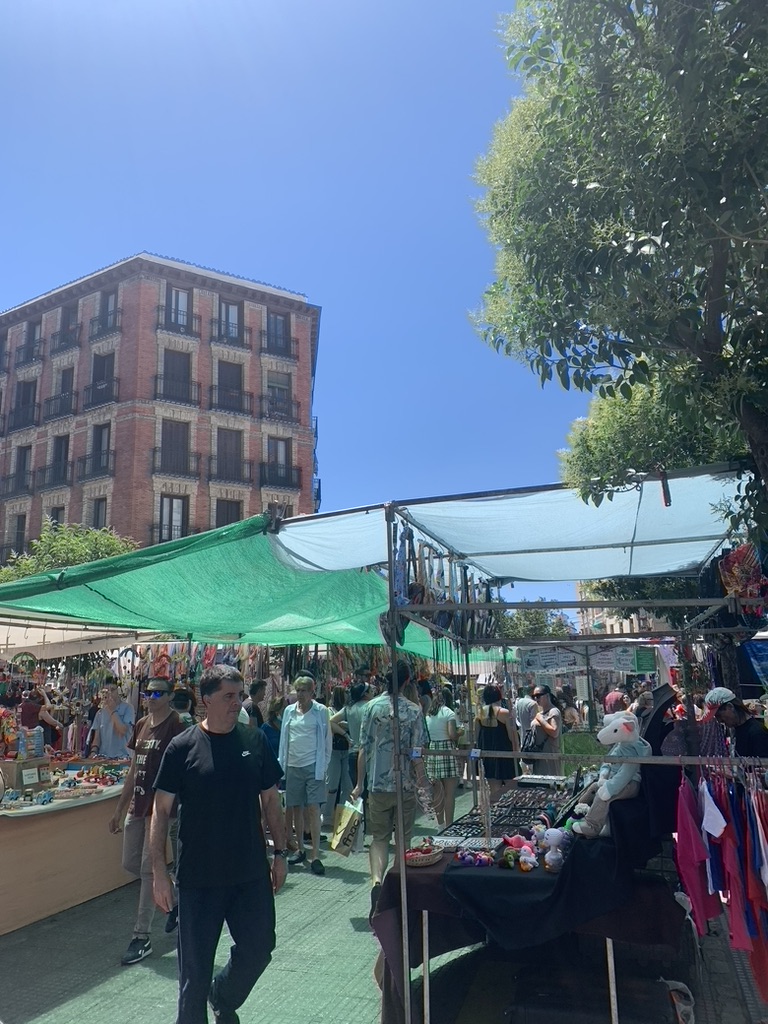
El Rastro is a longstanding pillar of Madrid that is unlike the other, more obvious ones such as the Prado museum and Plaza Mayor — although it has been around for almost as long. El Rastro is a large street market that began when merchants would line the streets of the Lavapies neighborhood with make-shift wooden stalls on the weekends. El Rastro translates to “The Trail” referencing the trail of animal blood that came from the slaughterhouse to the wagons right near where the market was held. Back then, products being sold ranged from fruit stands to silk merchants. Traditionally, each street had a specialization but today it is more of a bustling mixture with stands selling artwork, jewelry, leather goods, and antiques. The streets are closed down and the market is held from roughly 9 a.m. to 3 p.m. every Sunday. There are many remaining secondhand places but the vendors have definitely become a bit more commercialized. I was very excited to visit El Rastro because I had not had much time to shop around Madrid and was eager to see what the famed market had to offer. It certainly did not disappoint and stretched further than I had expected – it felt like the streets were filled with people for as far as I could see. I spent the next few hours perusing the market and even picked up a few souvenirs. I am excited to hang up my new print of the Madrid skyline in my dorm room this Fall! Additionally, we enjoyed practicing our Spanish with vendors, and it was wonderful to see many of them were so passionate about their craft. My observation that was most striking was that the market shoppers were mostly young people and a few families. I am not sure if that has always been the demographic at El Rastro, but it is certainly what I encountered. The group consensus seemed to be that it was a pleasant experience and some people pointed out that there was a good amount of repetition in the types of products being sold. Overall, going to El Rastro is a must-do in Madrid to experience the rich tradition of the long-standing market.
El Rastro (Spanish)

Written by: Matt Grieco

Empezamos el nuestro Domingo con una caminata a El Rastro. Primero, caminamos por el barrio de Lavapiés en Madrid. Vimos restaurantes, cafés, y lugares para cortar el pelo. El barrio de Lavapiés fue uno de los lugares más únicos que hemos visto. Además, fue obvio que la población de Lavapiés era más diversa, y no había demasiado turistas por el barrio. También, vimos la calle de la Cabeza, una calle con la cuenta que era demasiado interesante de mi tiempo en Madrid. Después de nuestro tiempo en Lavapiés, llegamos a El Rastro. Madrid siempre está concurrido, pero el Rastro fue el lugar más concurrido que hemos visto por todo de mí tiempo en Madrid. Como vi en el imagen debajo, no teníamos espacio para caminar porque todos de las vendedores estaban lleno con personas. En mi tiempo en El Rastro, ví algunas vendedores que vendía cualquier cosa que necesites. La mayoría de los vendedores que vimos tenían ropa de segunda mano, pero había muchos tipos diferentes. Algunos vendedores tenían ropa de deportes y otras tenían vestidos y zapatos. 

Era similar a las tiendas en los Estados Unidos que venden ropa vieja, pero creo que esa ropa era mucho más cara. Cuando voy a tiendas de segunda mano en los Estados Unidos, toda la ropa es increíblemente barata, sin embargo, la ropa en El Rastro no era mucho más barata que la ropa nueva. Si muchas de las prendas eran emocionantes y únicas, no creo que fueran lo suficientemente baratas como para comprarlas. Aparte de la ropa, tenían joyas y accesorios, pero eran muy genéricos y simples. Me hubiera gustado ver artículos más auténticos en lugar de eso.

Mi experiencia en el Rastro fue muy diferente de mis expectaciones. Pensaba que iba a ver muchos madrileños en un lugar que representaba la cultura Madrid, pero en realidad el Rastro me parece un lugar para ganar dinero, y vende cosas baratas a los turistas. Antes de mi tiempo en el Rastro, aprendí de la historia, y como el Rastro fue un lugar importante para la gente de Madrid, pero ahora el Rastro ha cambiado mucho a un lugar para atraer las turistas. En mi tiempo en Madrid, he notado las lenguas en algunos lugares porque en lugares como la Alhambra o las catedrales, oigo mucho inglés y otras lenguas extranjeras, y el Estro no era diferente. Pienso que oye ingles mas de espanol en el Rastro, y por eso el Rastro no tenía un sentimiento muy Madrileño y tenía un sentimiento de turismo.

El Escorial

Written by: Emily Foscaldo

After taking a bus, the group walked over to this quaint area and grabbed a bite to eat. I had a tortilla, which is a very common food here. It contains eggs, onion, and potatoes, and it takes the form of a cake, but tastes a bit like an omelet! Other people in the group ordered coffee, which we have learned that it is not common to have iced coffee, therefore they gave us a cup of ice to put the hot coffee into. 

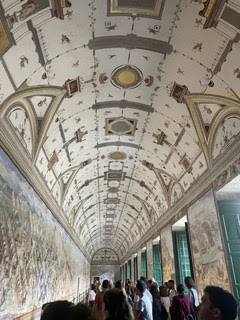
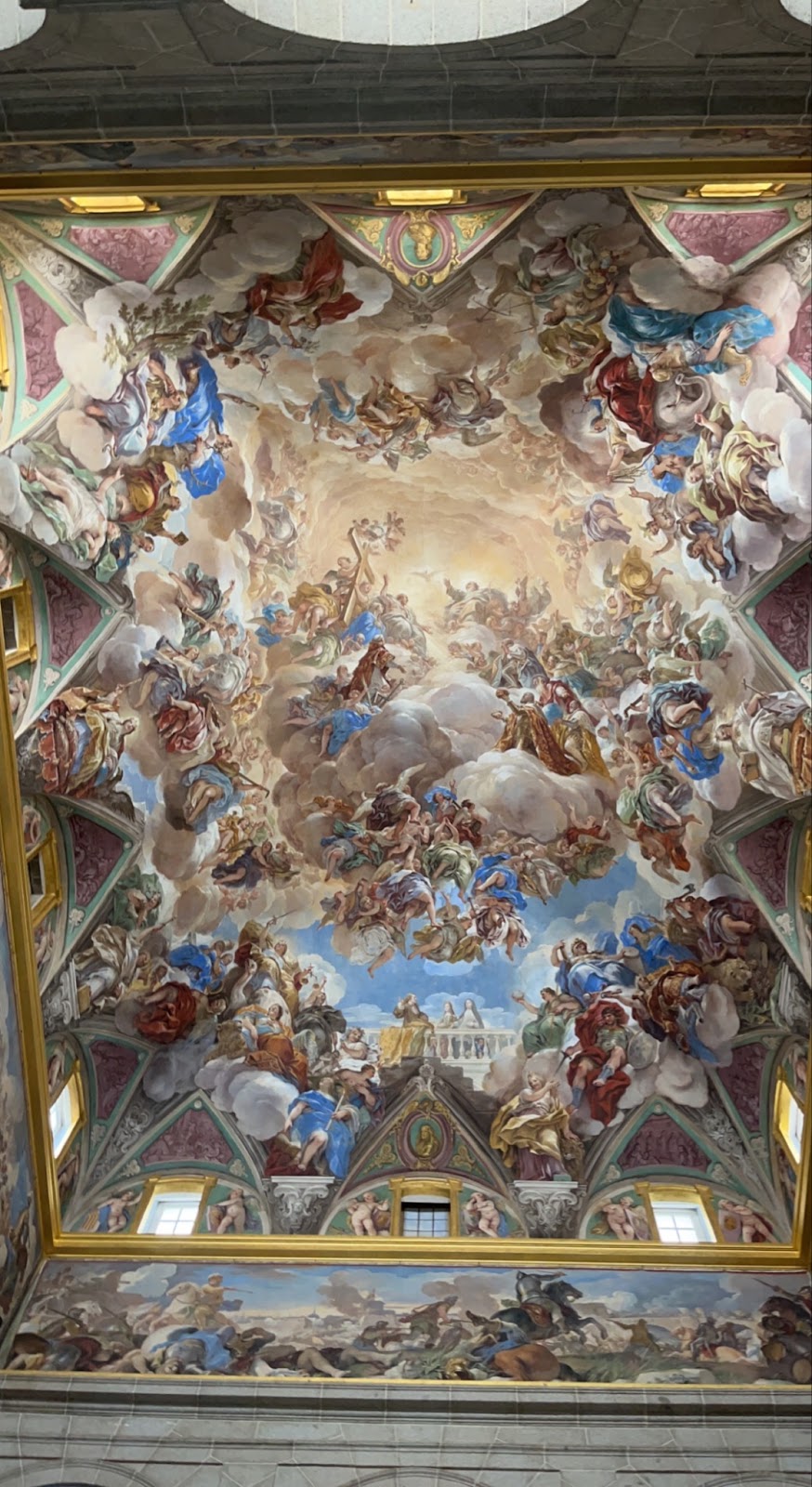
I noticed that the weather felt much cooler, and there was a nice breeze in the air: a perfect day for a visit. After breakfast we left for El Escorial, which contains a palace, church, monastery, and numerous other fascinating areas. Philip the second began the creation of El Escorial in 1563 in a way to remember the defeat of the French battle of St. Quentin. Despite the numerous years from the start of the formation of the building, the structure was very well kept, with large pillars and stone that remained intact. We began our walk and were greeted by numerous beautiful paintings that lined the walls and the ceilings. Our breath was taken away by a fantastic piece of art that decorated across the ceiling, which we took a long staircase to get to.

We visited the past rooms of kings and queens, and noticed how small the beds and their bedrooms were, for we assumed they would have grand beds and bedrooms. 

We then entered the monastery and saw the graves of numerous kings and queens that were scattered throughout. There were also infants of kings and queens that did not survive childhood, which was a common occurrence during this time period. The final room we visited contained reigning kings and queens with large caskets that nestled in the wall around the circular room. I was shocked to learn that their bodies are not in the caskets but instead they are underground, which is something we viewed with King Ferdinand and Queen Ysabelle. 

Once leaving the monastery, we dispersed into groups for lunch, and we found a very cute restaurant that had seating outside. Lizzie (Elizabeth) Leo and I split tempura veggies with our meals, and we received very salty soy sauce as a dip for it. Definitely something new, but it brought much flavor to the vegetables and tasted very good! 

After lunch, the group met back at El Escorial and we toured a church, which contained one of the highest ceilings I have ever seen. Similar to the beginning of the tour, the church had a large painting that covered the ceiling, and it was absolutely stunning. The group walked throughout the church and we were lucky enough to go into an exhibit that had not been opened prior to the pandemic beginning. 

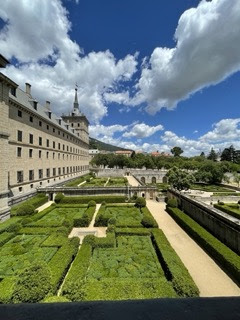
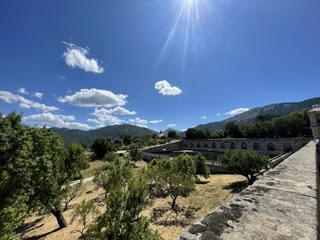
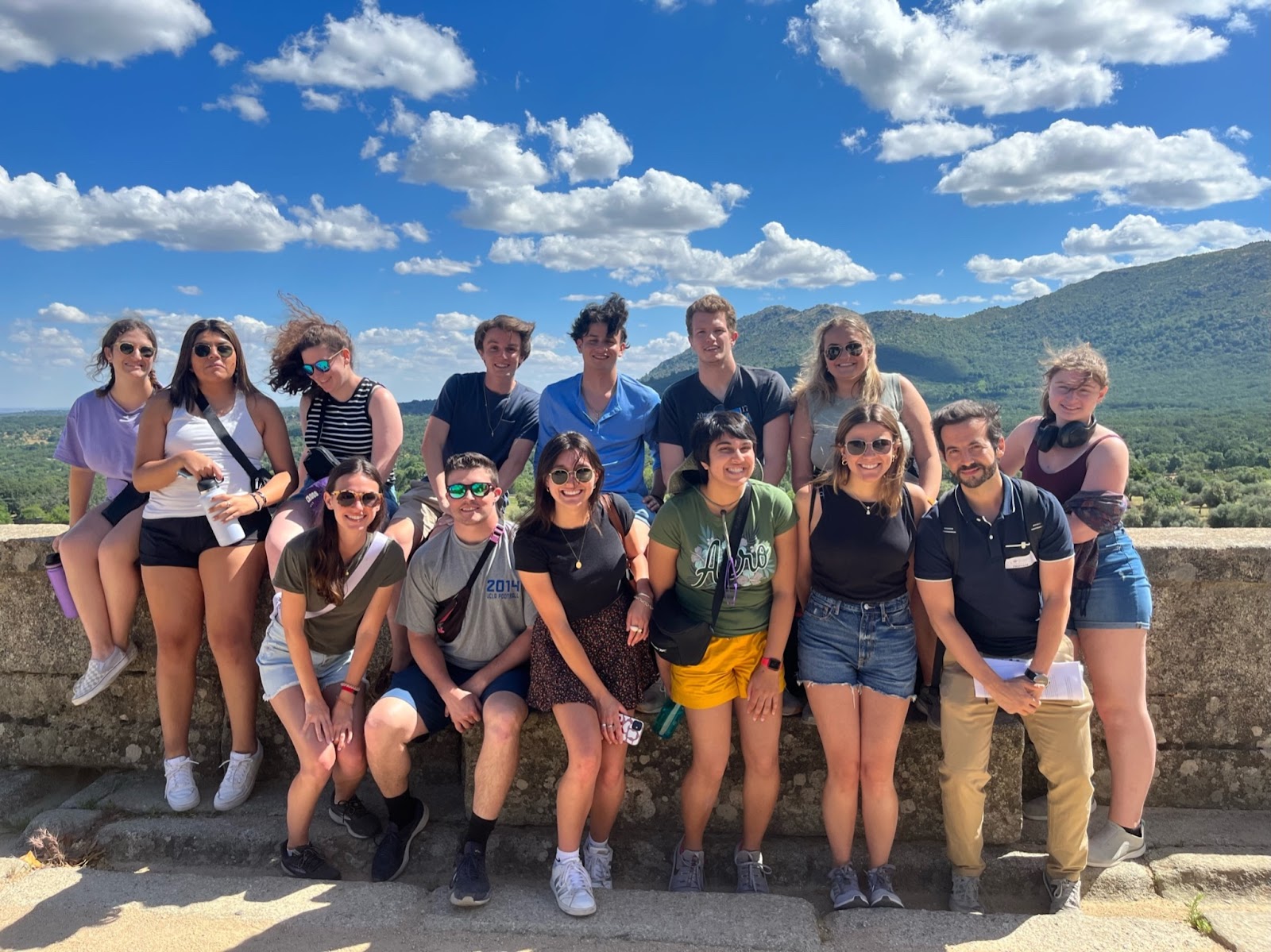
Our last stop was to the Gardens, which was surrounded by a beautiful view of the area surrounding El Escorial, so far that we could see the towers in Madrid!

There were numerous peacocks which had long, delicate feathers, and they walked around the outside of the gardens. I have been deemed the photographer of the group, so I took numerous pictures to capture our wonderful trip! 

The weather was fantastic, the foot traffic was very low, and the experience was great overall!!

El Escorial (Spanish)

Written by: Elizabeth Leo

¡El sábado hicimos una excursión de un día a El Escorial con Juan y la clase! Este fue nuestro primer viaje en autobús, por lo que fue interesante ver la diferencia entre cómo funcionan los trenes y los autobuses. Mientras conducimos hacia el área, notamos cuánto cambiaba el terreno. Las colinas y las montañas realmente nos sorprendieron a todos cuando mirábamos por las ventanas.

Cuando llegamos a la parada de autobús, Juan nos mostró la colina e inmediatamente notamos las diferencias entre el lugar donde estábamos en El Escorial y otras ciudades que hemos visitado. No era tan grande como muchas de estas ciudades, pero tenía mucha naturaleza y belleza que no habíamos visto antes. Mientras subíamos la colina, vimos el palacio-monasterio que visitaremos más tarde. ¡Era difícil pasarlo por alto porque era tan grande y grandioso! Más arriba había muchos cafés, restaurantes y tiendas que no esperaba ver en esta pequeña colina, ¡pero nos sorprendió!

Todo el grupo se sentó en un café porque aún teníamos tiempo antes de nuestra visita al Real Sitio de San Lorenzo de El Escorial. Cada uno de nosotros pidió algo, ya fuera un café, un croissant, una tostada con tomate o una tortilla española. Fue un gran comienzo para nuestro día, ya que todos hablamos sobre lo que esperábamos y reflexionamos sobre lo que habíamos hecho en nuestras primeras semanas en España.

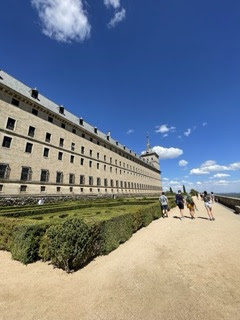
Luego nos dirigimos al Real Sitio de San Lorenzo de El Escorial. A primera vista, era muy grande y realmente ocupaba mucho terreno. Aquí es donde históricamente ha vivido el Rey de España. Está situado en las colinas del pueblo de El Escorial y realmente tiene una presencia de grandeza. Primero dimos una vuelta por el exterior y Juan nos contó un poco la historia de para qué ha servido el palacio-monasterio. Este era un lugar donde la religión y el gobierno se unían como uno, que era lo que Fernando e Isabel más querían. Sin embargo, lo interesante es que Felipe II es el único monarca que vivió en el edificio principal. Entramos al edificio e inmediatamente notamos los grandes frescos en todas las paredes y techos circundantes. La complejidad de estas pinturas fue increíble, los colores que pudieron mantener y las historias que transmiten. Otra parte interesante de El Escorial fueron las tumbas y entierros de los Reyes, Reinas y familiares. Esto realmente demostró la importancia de El Escorial en la Monarquía y cómo valoraban estar enterrados todos en el mismo lugar. Lo admito, fue un poco inquietante de ver y era como un cementerio, pero de todos modos fue interesante.

Dos de mis partes favoritas de El Escorial fueron los jardines y la biblioteca. La biblioteca no permitía tomar fotografías, pero estaba llena de libros antiguos, globos terráqueos y mapas de la época que los residentes y visitantes valoraban. La parte más impresionante fue la pintura que se apoderó del techo. Mostró todas las innovaciones, invenciones y aspectos educativos que prosperaron en ese momento. Algunos ejemplos fueron la filosofía, la geometría, la teología y muchas otras ideologías que aún hoy son extremadamente relevantes. Todos estábamos asombrados, con la cabeza levantada hacia el techo mientras caminábamos por la habitación para admirar la obra de arte. Creo que esta fue la parte más interesante de todo el día. Los jardines, sin embargo, también eran increíblemente grandiosos y hermosos. Tenemos tantas fotos geniales del grupo y del paisaje aquí. Nos reímos mucho con Juan y caminamos tranquilamente para asimilar lo que habíamos visto ese día.

Un Dia En Toledo (Spanish)

Written by: Ahana Nagarkatti

Ayer, visitamos la ciudad histórica de Toledo. Caminamos a través de la ciudad, y al mismo tiempo caminamos a través del cuento de las tres religiones que vivían en armonía. De esta manera, experimentamos el impacto de la convivencia.

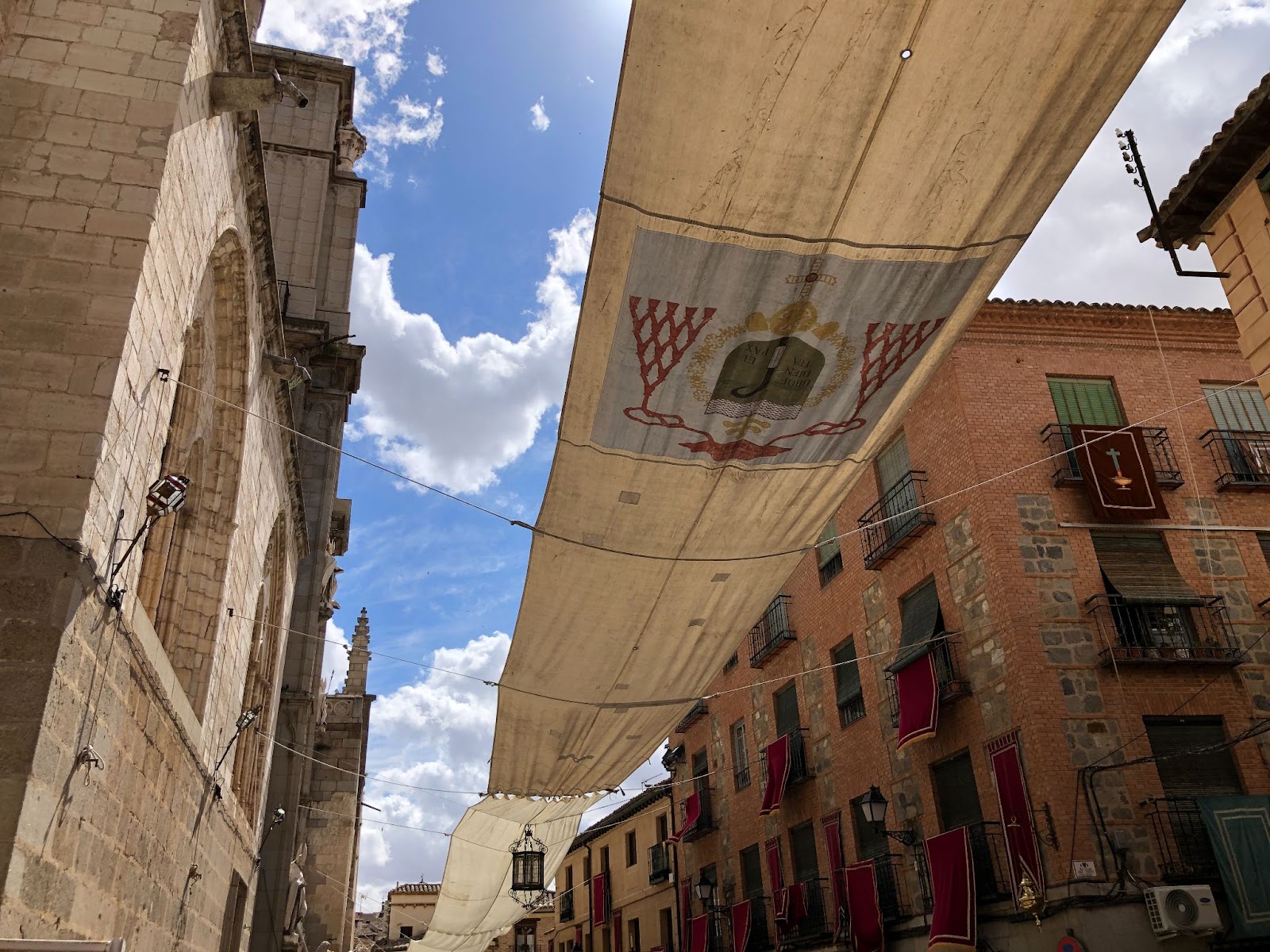
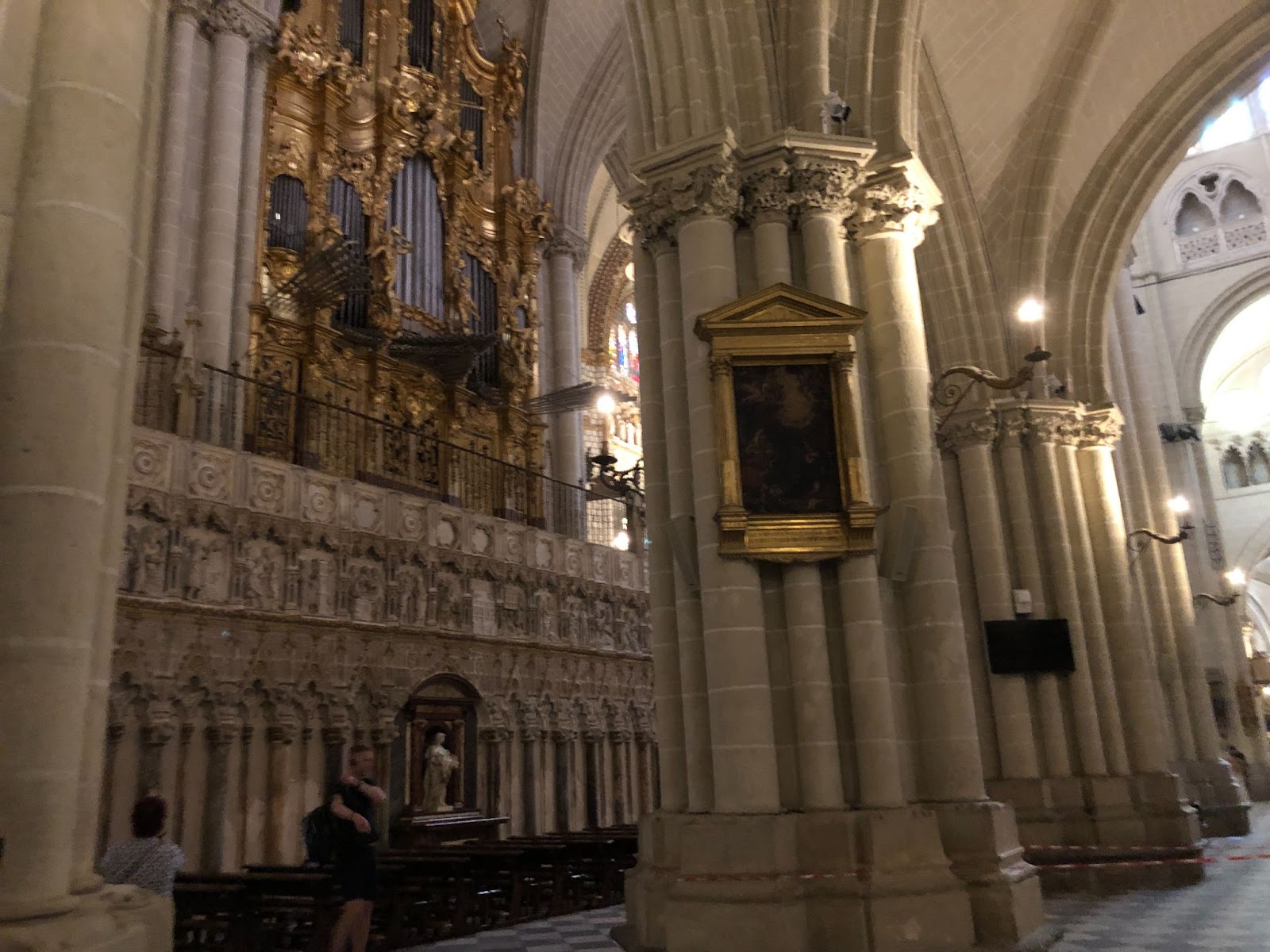
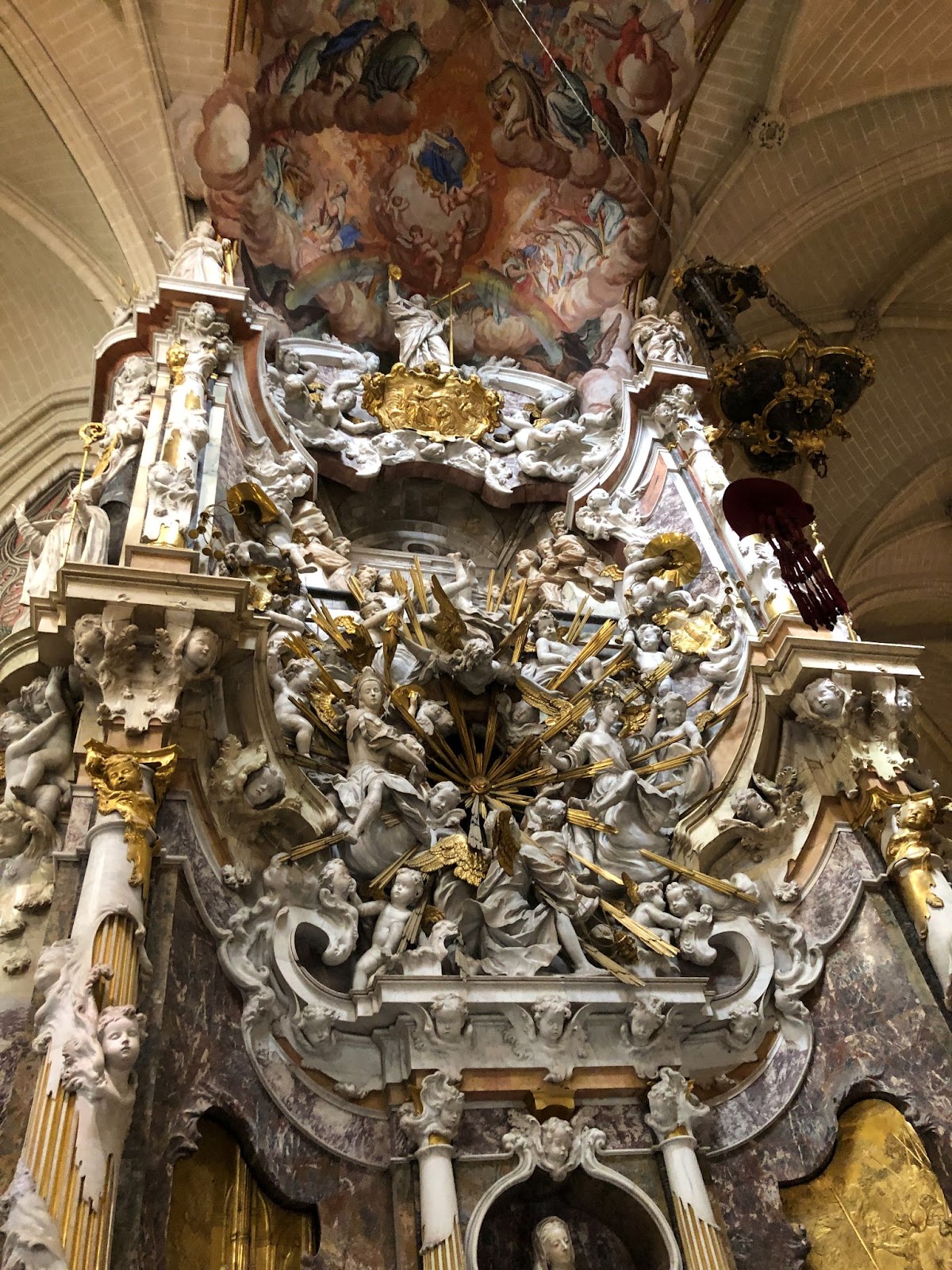
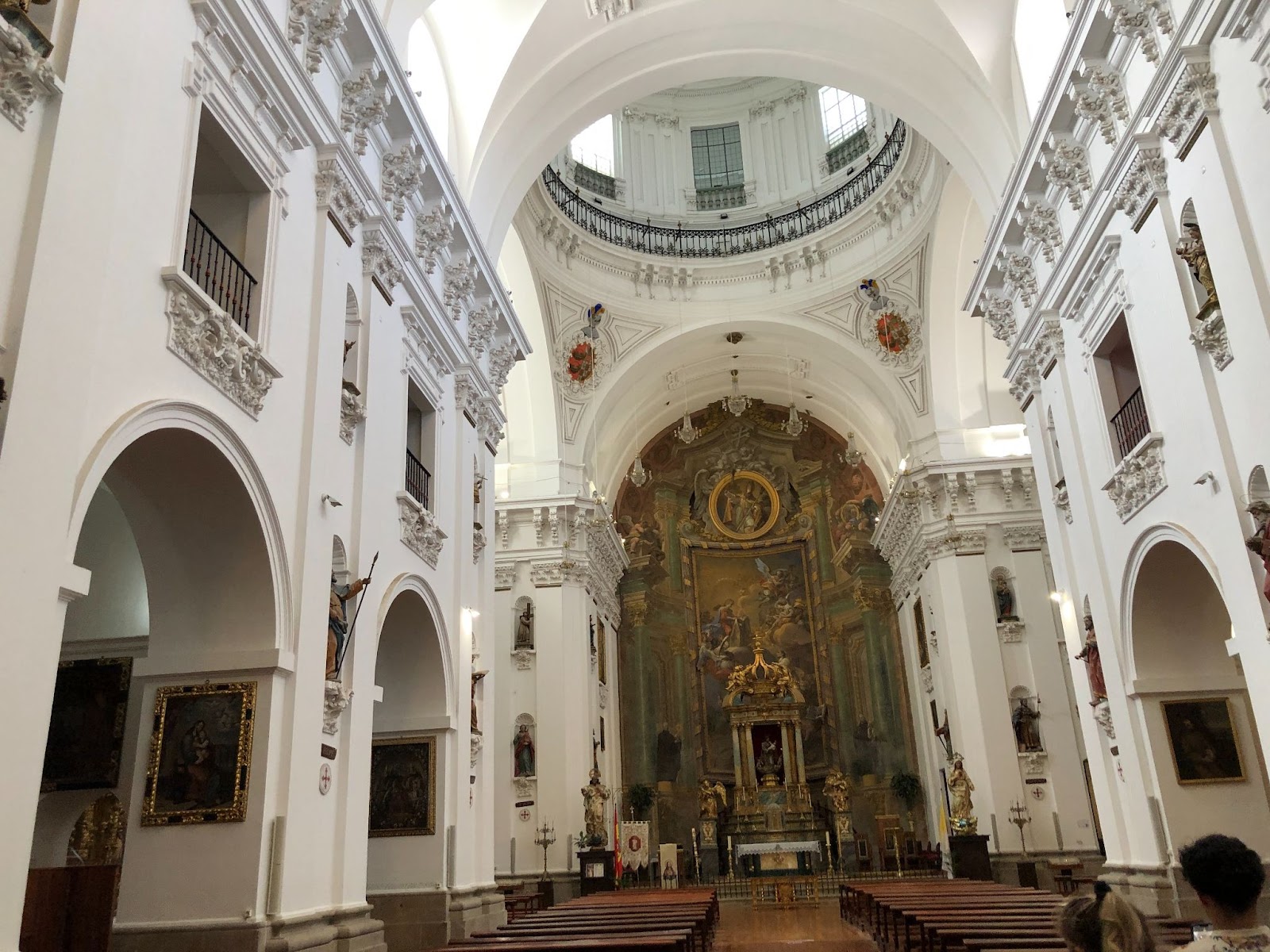
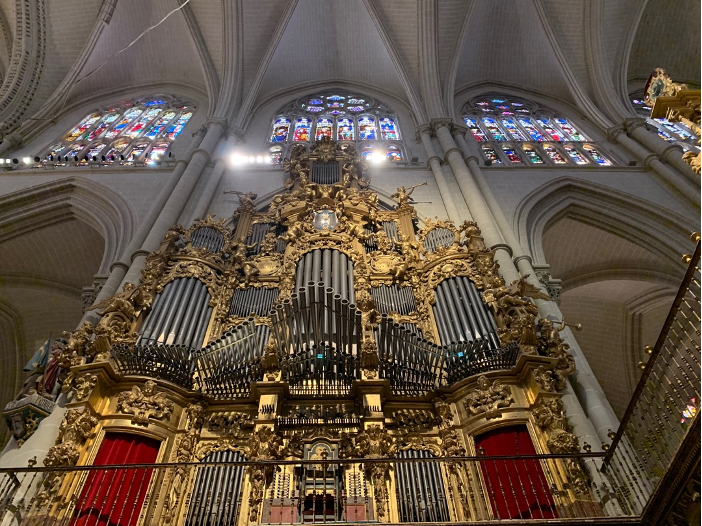
Empezamos nuestro día en La Santa Iglesia Catedral Primada de Toledo. Este edificio gótico es impresionante en su tamaño y en los grandes hitos de la arquitectura que consistieron de su construcción. Por ejemplo, la catedral es doble girola. Las bóvedas fueron construidas en forma de letra i griega (“y”), para que haya espacio para dos naves laterales a lo largo de una sola nave. También, la catedral tiene influencias del arte mudéjar, y además una parte barroca que desafía la gravedad y es impresionante.

El interior de la catedral.

Parte barroca.

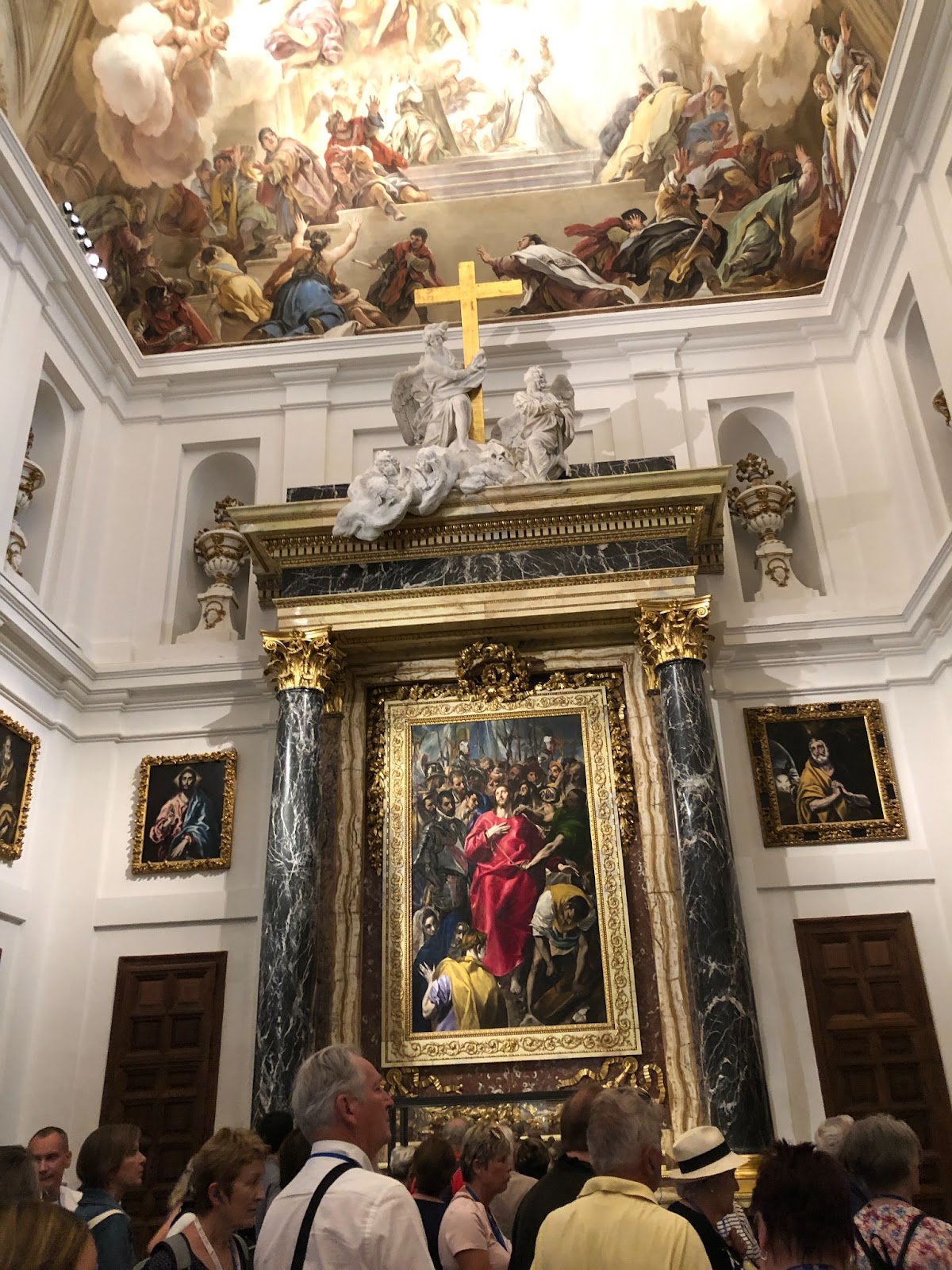
Esta catedral es enorme – ¡hay un museo de arte adentro! Este museo tiene obras de artistas italianos como Tiziano, y más importante, obras de El Greco incluyendo El Expolio.

Ex Expolio de El Greco.

Esta obra es significante porque su artista revolucionó el estilo de pintar. Sus obras tienen foco en la luz, la perspectiva, y las caras y las extremidades están alargadas – todo sumando para evocar un sentimiento divino. Vimos otra pintura suya en La Iglesia de Santo Tomé más tarde en nuestra visita (El Entierro del Señor de Orgaz). Además de obras de El Greco, sentimos la presencia del San Ildefonso y la historia de cómo recibió la casulla de manos de la Virgen María.

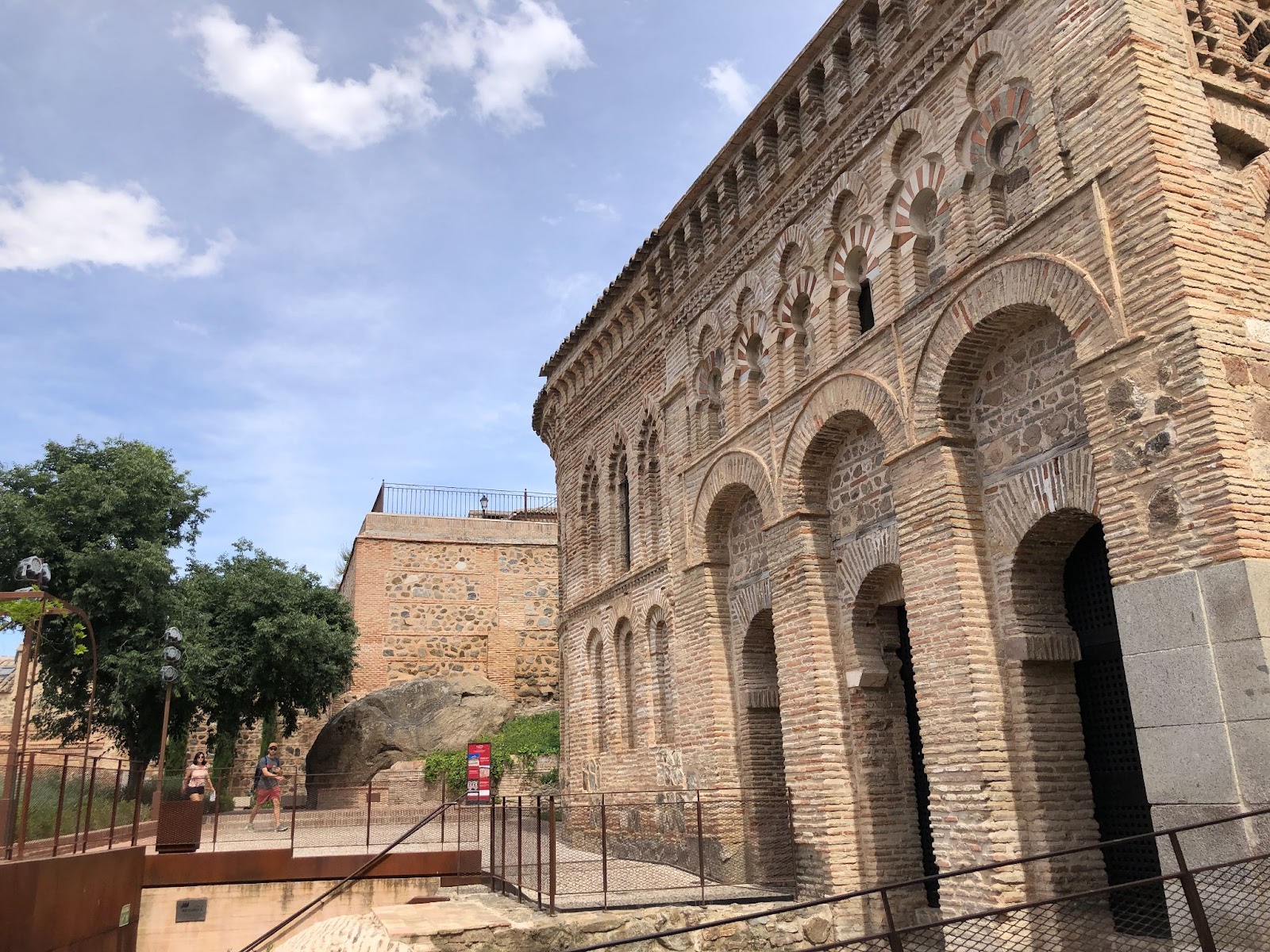
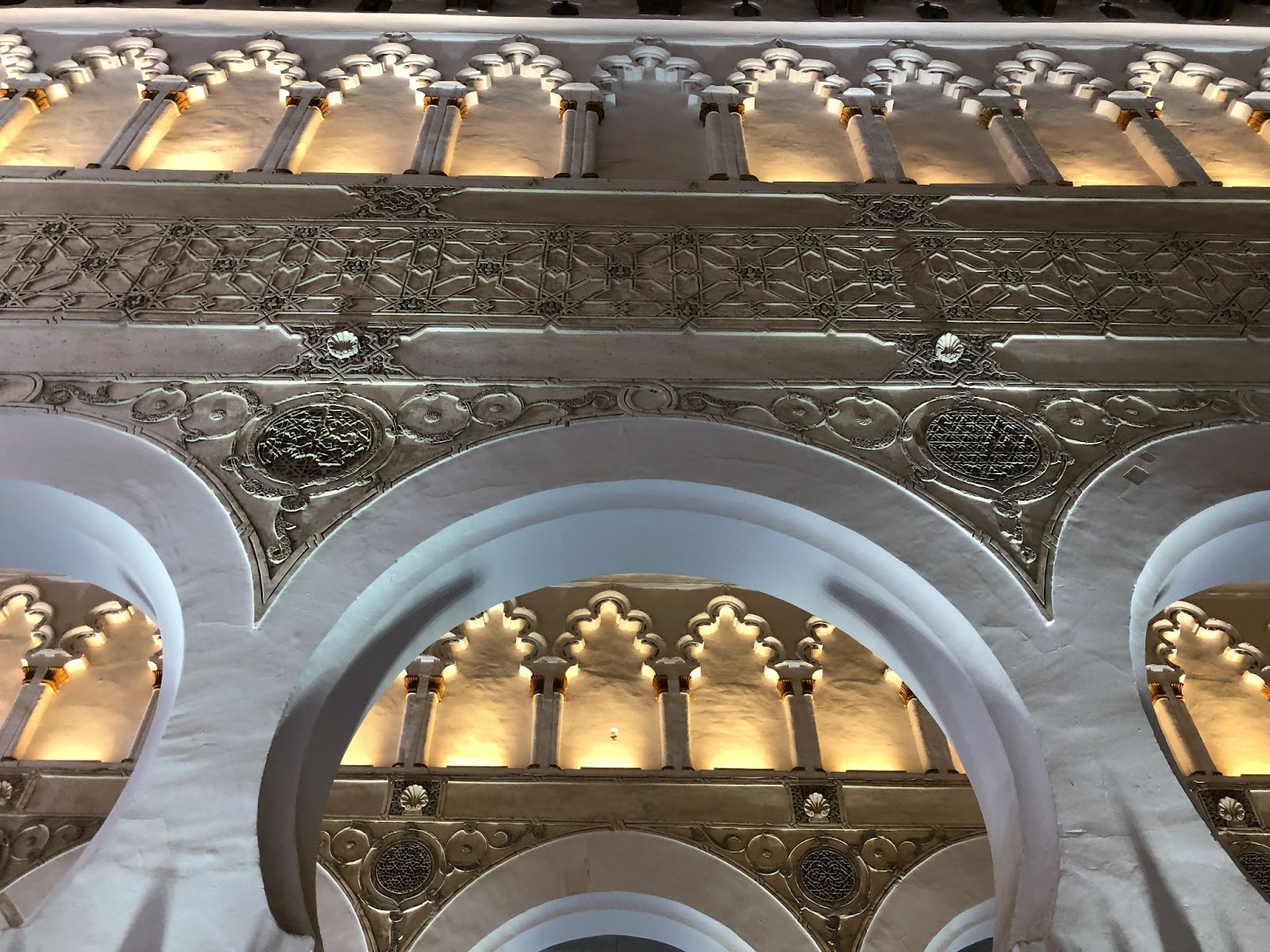
Siguiente en nuestra visita, caminamos a una iglesia jesuita, una mezquita pequeña (que se convirtió a una iglesia) y dos sinagogas de estilos diferentes. Aprendimos sobre la expulsión de los judíos en el año mil cuatrocientos noventa y dos, y también del programa de reparación para compensar ese gran error. Desde el año dos mil, los judíos sefardíes tienen derecho a la nacionalidad española.

La iglesia jesuita.

La mezquita.

Detalles de la pared en una sinagoga.

Finalmente, probé las delicias de Toledo. Comí el venado para el almuerzo, y ¡me encantó mucho! Me pareció como el bistec, pero más tierno en este caso. También probé el mazapán. Comía el mazapán de India durante la navidad, pero ese mazapán es más dulce que el de Toledo. A pesar de todo, me gustó este postre toledano. ¡Y me fascinó mucho nuestra visita!

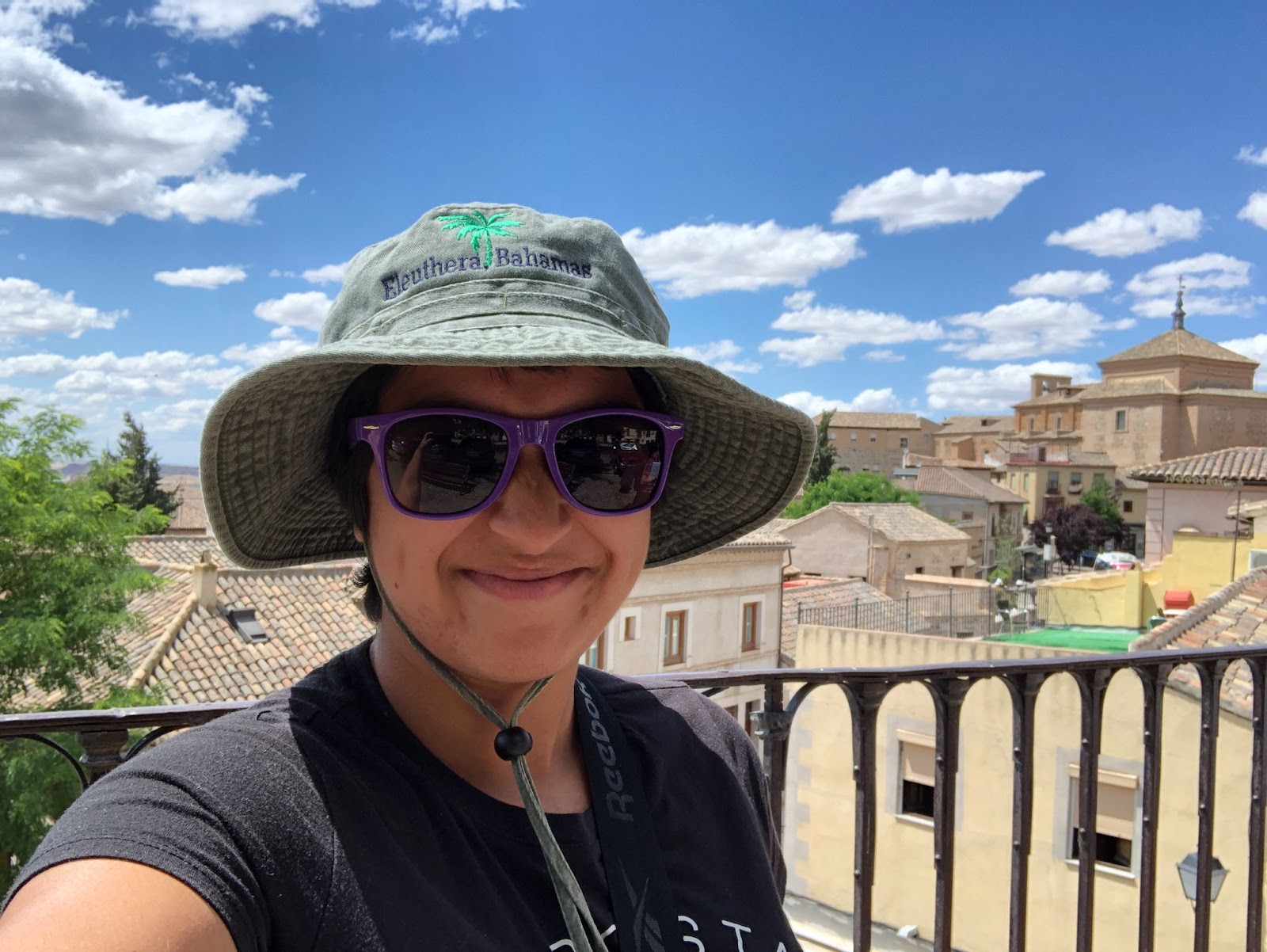
¡Yo en Toledo!

A Day in Toledo

Written by: Alanya Telerski

After a good breakfast and a short half hour train this morning, we headed off to spend the day in Toledo. After spending five days away while in Granada and Sevilla, I wasn’t convinced that one day was enough time in the city, but boy did our packed day prove me wrong. After ascending the major hill Toledo is built on, the first stop of the day was the Catedral de Toledo. The Primatial Cathedral of Saint Mary of Toledo is the second gothic cathedral that we have visited so far in Spain, and this one surely did not disappoint with its large, vaulted ceilings and extravagant stained-glass windows characteristic of the gothic style. We walked through the cathedral while listening to a very helpful audio guide that highlighted some of the most important aspects. My favorite part was being able to admire the many pipe organs on display. There were four major ones among the main altar and choir, and nearly ten organs in total.

After leaving the Cathedral we stopped for lunch at a local restaurant where I had some refreshing gazpacho while some of my classmates sampled venado (venison), a traditional Toledo dish. After lunch and some gelato, we went to La Sinagoga de Santa María La Blanca, El Monasterio de San Juan de Los Reyes, Mezquita Del Cristo De La Luz, and we even stopped into a Jesuit church along the way. Spain in general has a very nuanced religious history, so it was important to visit the locations in Toledo which best displayed the influences of Christianity, Judaism, and Islam. The synagogue and mosque were taken over and turned into Catholic churches soon after the 1492 fall of Granada, therefore visiting these sites reminds us of the important impacts that the Spanish Muslima and Jewish populations had on the country.

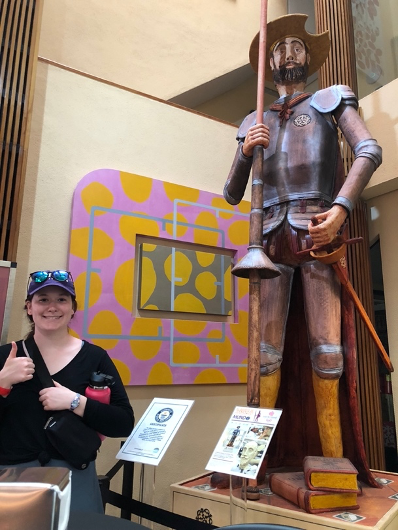
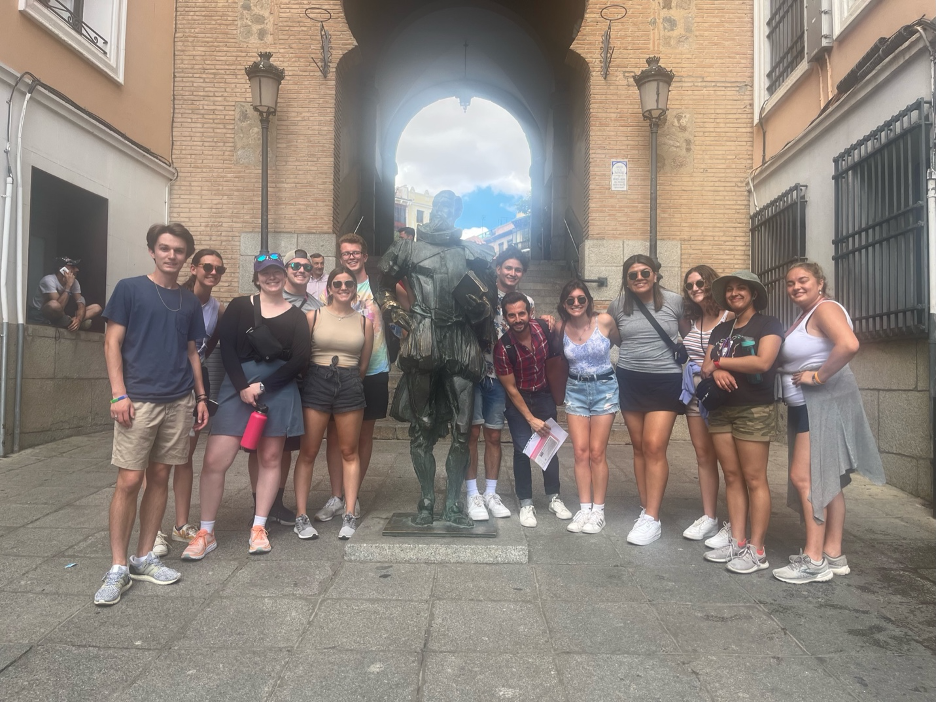
Just before hopping on the train back to Madrid, I made sure to try some of Toledo’s famous marzipan. While picking out some treats to enjoy on the ride home, we bumped into a statue of Cervantes made ENTIRELY OUT OF MARZIPAN. For all my fellow literature fans out there, Miguel de Cervantes wrote Don Quixote De Le Mancha, one of the most famous pieces of Spanish literature. Toledo is very proud of the fact that Cervantes and his wife lived in Toledo and has memorialized his work in various locations across the city. 

In comparison to the other cities that we have visited so far, Toledo sticks out because of its rich history. Not only does Toledo display Spain’s nuanced religious history, but it also actively celebrates important Spanish contributions made in the 15th and 16th centuries. Generally, Toledo felt like a loving preservation of medieval Spain, maintaining, and celebrating influences by artists like El Greco and writers like Cervantes. Preserved upon a hill, Toledo served as the perfect example of how Spanish pride celebrates and honors its historical events and cultural influences.

The Alhambra

Written by: Allyson Flavin

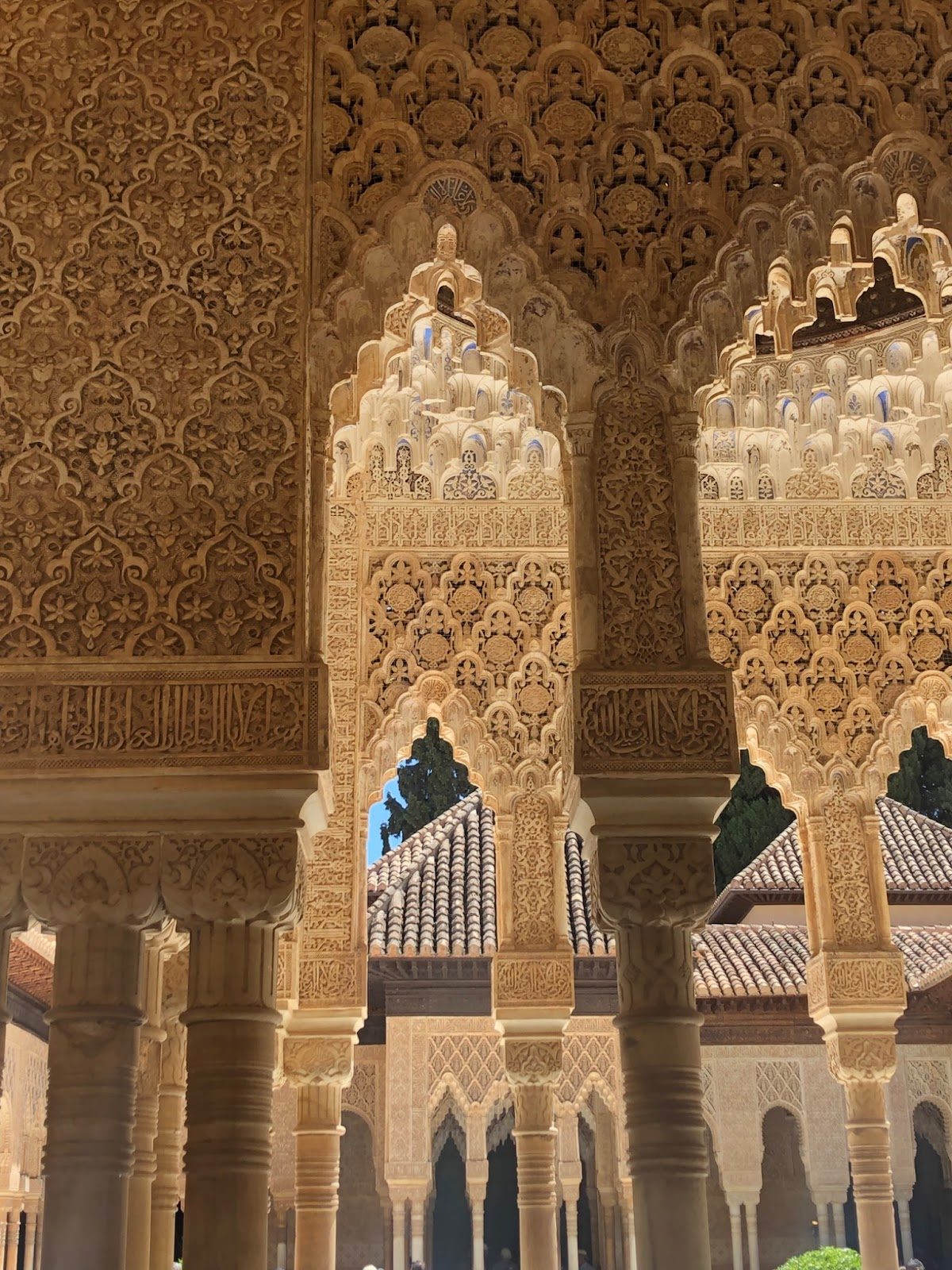
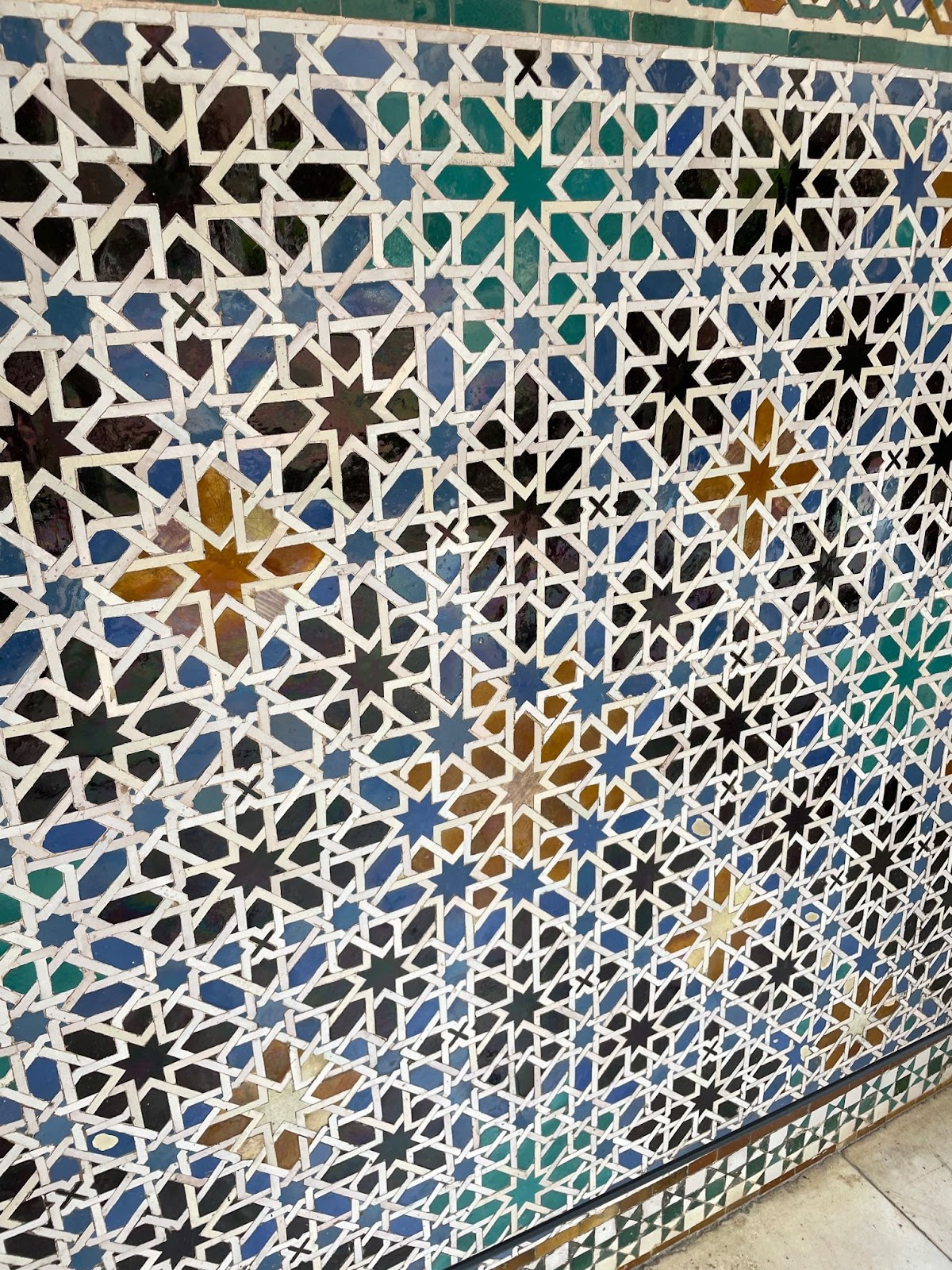
I have only been to an Islamic Mosque once, and it was absolutely beautiful. The mosque I have previously visited, however, is only a spec compared to the grandeur and intricate designs the Alhambra keeps within its walls. Designs flow from one room to another while holding a structure and order within the palace. I could not believe the creativity the architects had for such a vast space. When it came to geometric designs there was no end to different curves or angles, each one having a specific meaning. The Muslims of the 13th century (and far before in other places) were able to use Arabic within the walls of the Alhambra as additional decoration. Yet to say decoration, is misleading, and ultimately downplays the role of the architecture. Every single part of the Alhambra was meticulously thought out, and it shows. Everything was bursting with meaning as well as history of the Muslim Kingdom. 

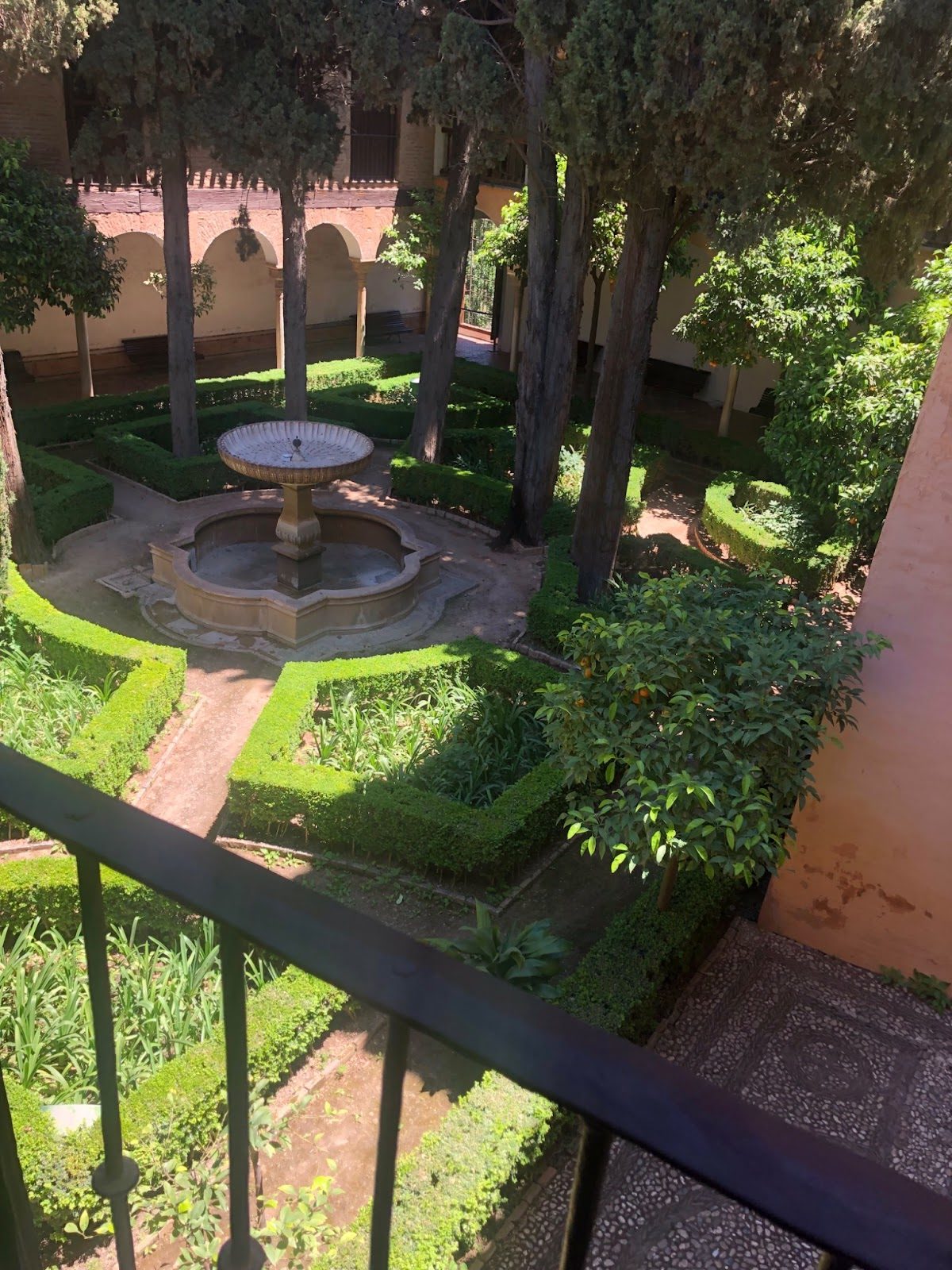
When walking through the halls of the Alhambra, I could easily envision the commotion that may have flowed through the palace back in the 13th century. The palace did not seem like a distant memory, but welcoming. The running water swayed throughout organized stone paths, while the greenery would sprout within designated areas. The intriguing relationship between the wildness of the earth, and the man-made stone structures, did not feel out of place, but at perfect balance. Throughout the centuries, the curators of the historical sites were able to maintain the original structure of most of the areas, but some were left to nature. For the places that were taken over by greenery, they were not jarring in the slightest. The grass grew through the cracks of stone, disregarding the order, but it felt as if it was a natural next-step. The Muslims of Granada already had welcomed the earth within the doors of their palace, so for it —to not over-power, but merge— with the man-made structures felt like a natural evolution.  

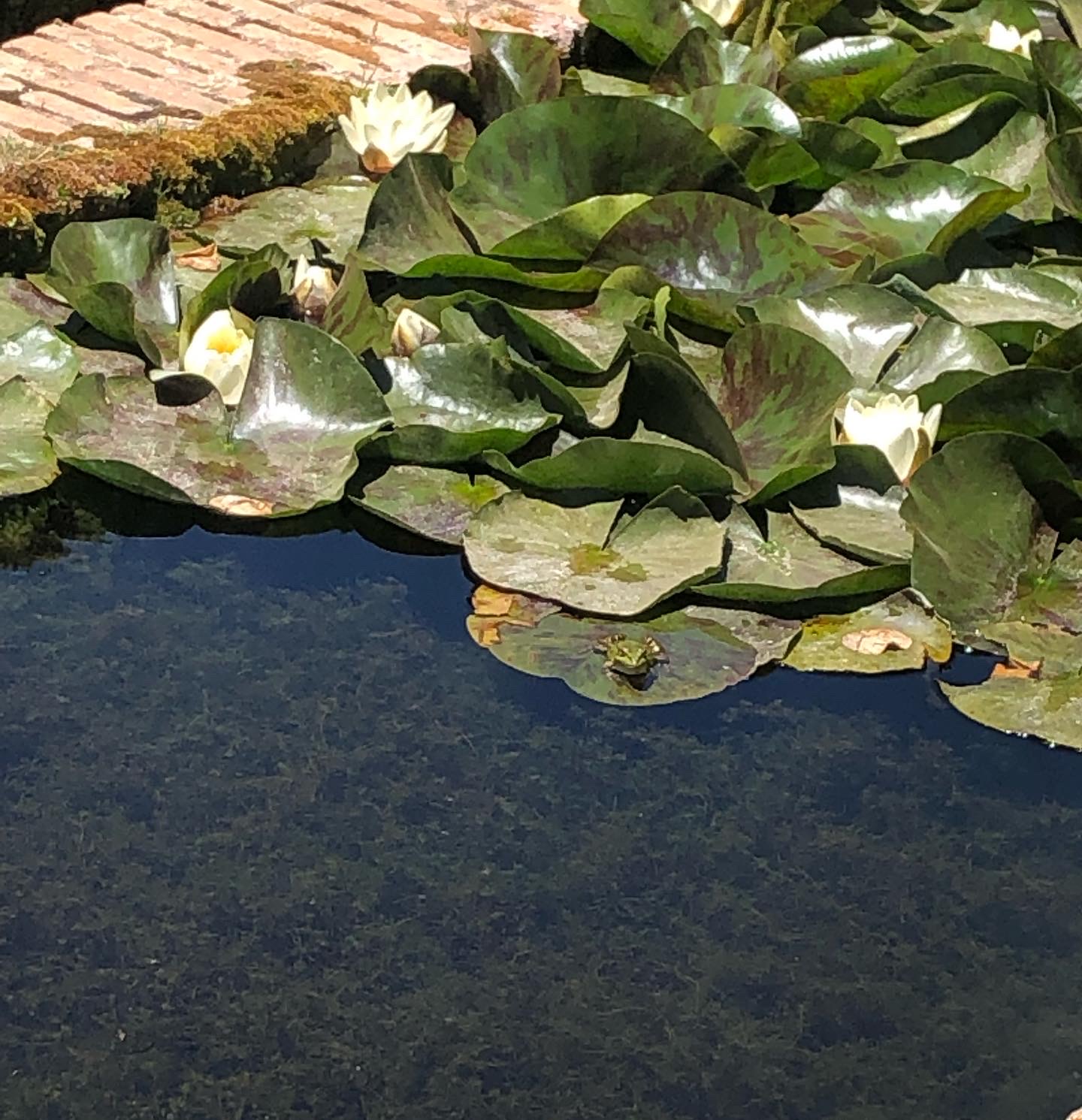
The garden captures the balance of earth and stone to an even further extent. The water continued to flow and provide nutrients for all the plants and animals in the vicinity. Far more wild-life was present within this summer home. Multiple birds flew from tree-to-tree trying to find food or a mate for the spring. Fish swam in the ponds, and I was able to notice a single frog croaking on a lily pad. When walking around the beautiful greenery, I had to only take one picture as no angle or lack of sunlight could make the garden undesirable. 

With all the tourists (including us) that ventured through the Alhambra in its entirety, it did not take away from the calm serenity of the entire place. A sense of strength and understanding flowed through the water-ways and palace corridors. Intelligence was also evident within the historical site. The walls themselves demonstrate the Muslim’s understanding of geometry as well as how one could carve stone. It is not only remarkable to see the intricate designs of the walls up close and personal within the Alhambra, but also that such beauty has survived so long. The palace is so well kept it is easy to imagine what it once was. To drift into your mind and understand the history at a personal level.

The Alhambra

Written by: Allyson Flavin

I have only been to an Islamic Mosque once, and it was absolutely beautiful. The mosque I have previously visited, however, is only a spec compared to the grandeur and intricate designs the Alhambra keeps within its walls. Designs flow from one room to another while holding a structure and order within the palace. I could not believe the creativity the architects had for such a vast space. When it came to geometric designs there was no end to different curves or angles, each one having a specific meaning. The Muslims of the 13th century (and far before in other places) were able to use Arabic within the walls of the Alhambra as additional decoration. Yet to say decoration, is misleading, and ultimately downplays the role of the architecture. Every single part of the Alhambra was meticulously thought out, and it shows. Everything was bursting with meaning as well as history of the Muslim Kingdom. 

When walking through the halls of the Alhambra, I could easily envision the commotion that may have flowed through the palace back in the 13th century. The palace did not seem like a distant memory, but welcoming. The running water swayed throughout organized stone paths, while the greenery would sprout within designated areas. The intriguing relationship between the wildness of the earth, and the man-made stone structures, did not feel out of place, but at perfect balance. Throughout the centuries, the curators of the historical sites were able to maintain the original structure of most of the areas, but some were left to nature. For the places that were taken over by greenery, they were not jarring in the slightest. The grass grew through the cracks of stone, disregarding the order, but it felt as if it was a natural next-step. The Muslims of Granada already had welcomed the earth within the doors of their palace, so for it —to not over-power, but merge— with the man-made structures felt like a natural evolution.  

The garden captures the balance of earth and stone to an even further extent. The water continued to flow and provide nutrients for all the plants and animals in the vicinity. Far more wild-life was present within this summer home. Multiple birds flew from tree-to-tree trying to find food or a mate for the spring. Fish swam in the ponds, and I was able to notice a single frog croaking on a lily pad. When walking around the beautiful greenery, I had to only take one picture as no angle or lack of sunlight could make the garden undesirable. 

With all the tourists (including us) that ventured through the Alhambra in its entirety, it did not take away from the calm serenity of the entire place. A sense of strength and understanding flowed through the water-ways and palace corridors. Intelligence was also evident within the historical site. The walls themselves demonstrate the Muslim’s understanding of geometry as well as how one could carve stone. It is not only remarkable to see the intricate designs of the walls up close and personal within the Alhambra, but also that such beauty has survived so long. The palace is so well kept it is easy to imagine what it once was. To drift into your mind and understand the history at a personal level.

La Alhambra y Granada (Spanish)

Written by: Lucas Giarrusso

Granada. Para muchos, Granada es una ciudad semi-importante en el sur de España; sin embargo, es mucho más que eso. Si hoy tuviéramos más tiempo, hablaría de las vistas del paisaje, el calor sofocante, la mezcla de cultura y religión, y de la Sierra Nevada que se levanta como una muralla al sur de Granada. Hoy, mi atención estará dirigida hacia la Alhambra. La Alhambra, construida entre 1238 y 1358, funcionaba como un palacio para el Sultán del Califato de Granada y como una fortaleza para proteger la ciudad que se encontraba debajo. Al entrar, te das cuenta rápidamente que no es como cualquier palacio de las películas, es mucho más. La Alhambra es una obra de arte en sí, es la obra de arte más grande del mundo. Es una casa, fortaleza, jardín botánico, museo, etc. Dividida en tres zonas principales, empezamos subiendo al Alcazaba (fortaleza).

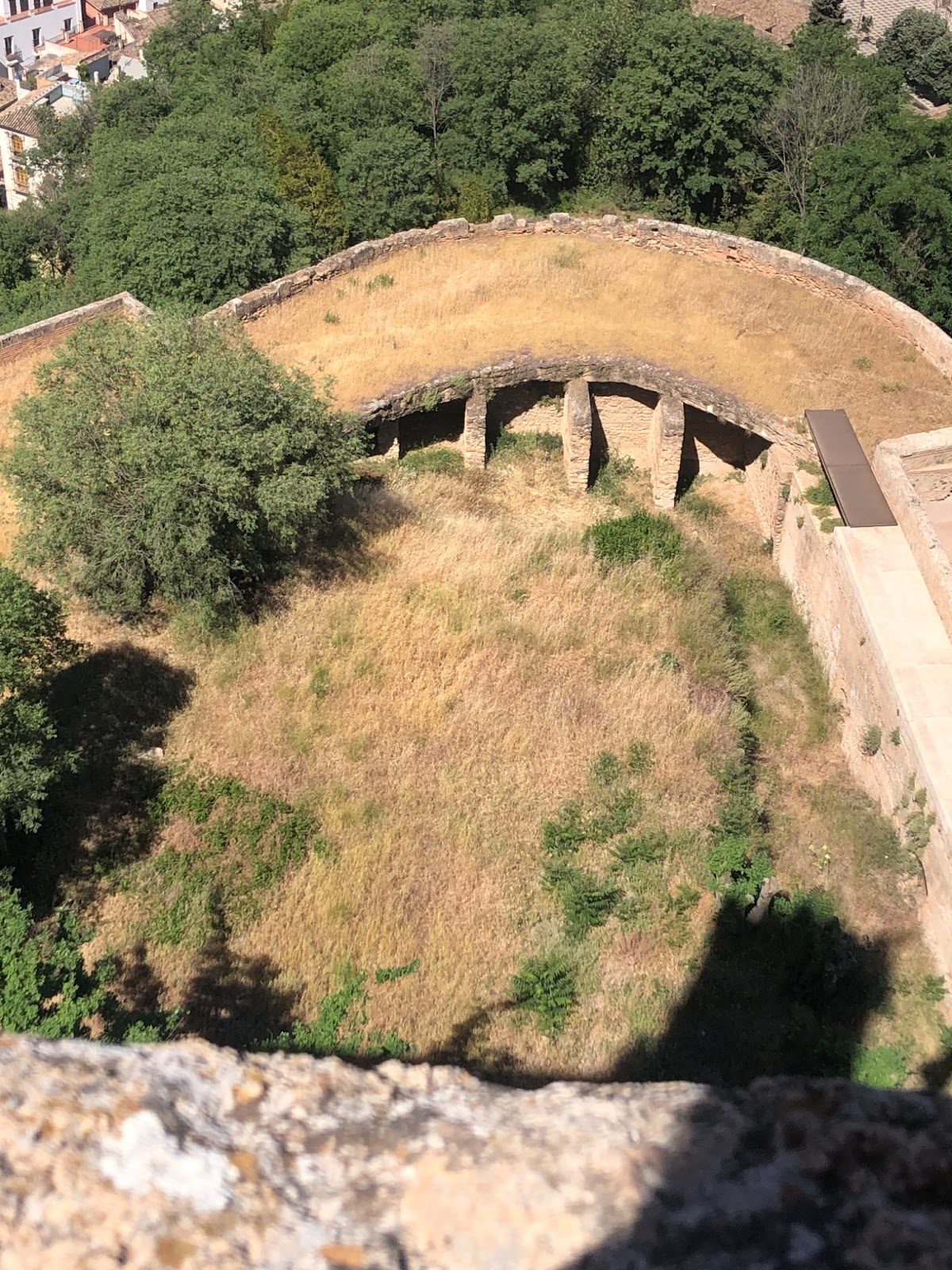
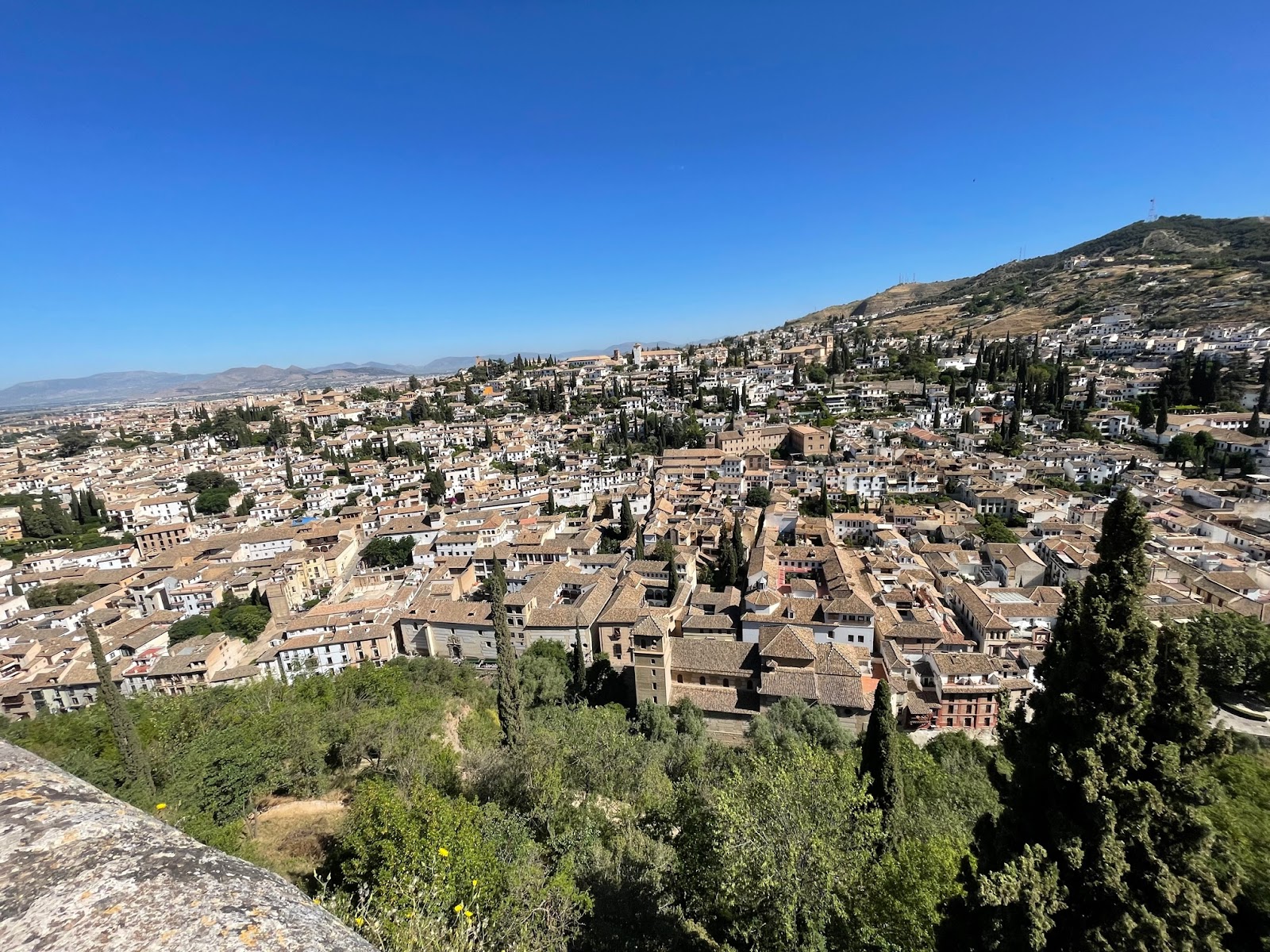
Antes de empezar, me gustaría añadir que no quiero incluir fotos estratégicamente. Creo que sería una falta de respeto a la Alhambra intentar exhibir su belleza por medio de una foto que no puede capturar el factor de sorpresa y admiración que sentí tras entrar (esa admiración nunca se esfuma, incluso 10 años después). Sin embargo, quiero compartir la belleza con la gente que no pudo visitar conmigo. El Alcazaba tenía unas vistas donde podías ver todo el valle granadino y la ciudad entera hasta los campos en la distancia. A la izquierda, se veía el Mulhacén, el punto mas alto de la España continental. Disfrutamos de la vista impresionante, y tomamos tiempo para sacar fotos. Siendo de una universidad de Massachusetts (un lugar muy plano), muchos de los alumnos nunca habían visto una llanura tan grande en sus vidas. Aunque había estado en el Alcazaba varias veces, cada vez me fijaba en algo nuevo, algo que no veía antes. Así va la cosa con la Alhambra; hay tanto que ver y tanto detalle que se tardaría una vida entera en apreciar la belleza que hay en la Alhambra. A veces me siento como si estuviera viva, respirando y con su propia alma. Nunca he visto una estructura con tanta personalidad. Bajamos las escaleras, y andamos en dirección a los Palacios Nazaríes

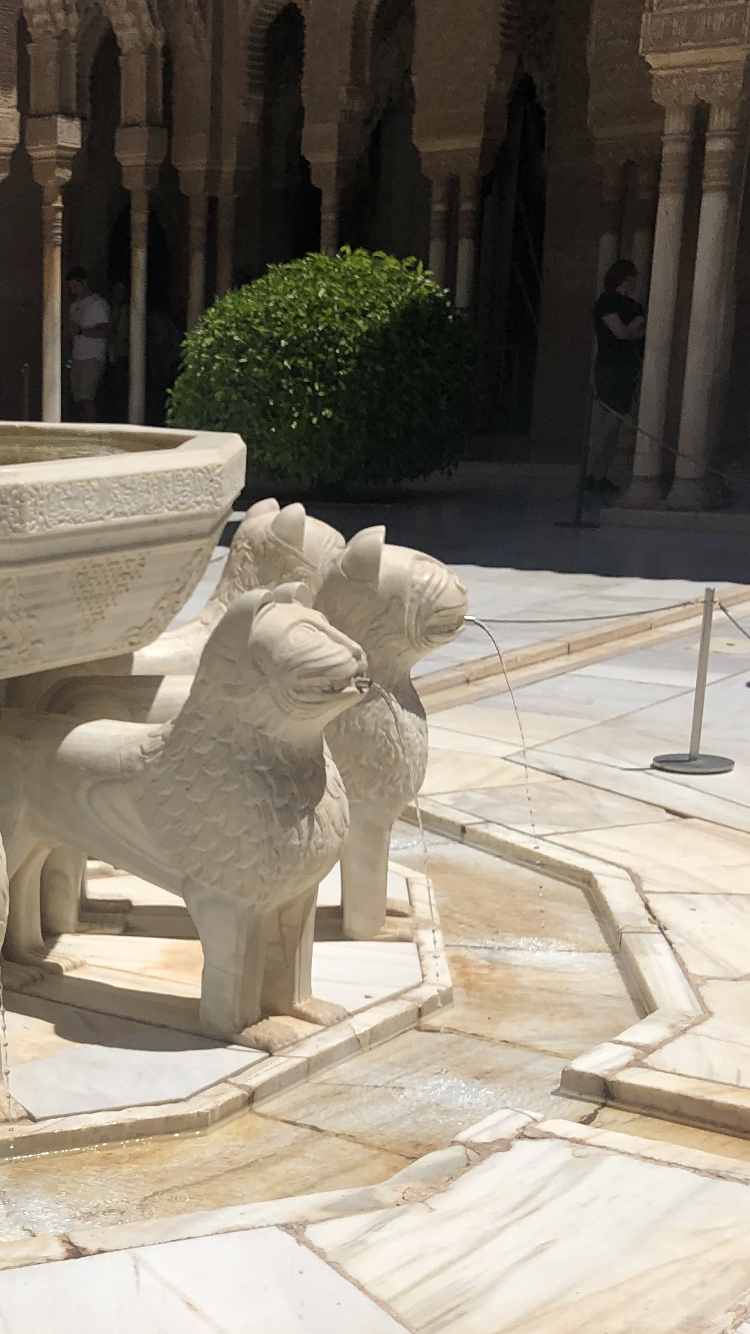
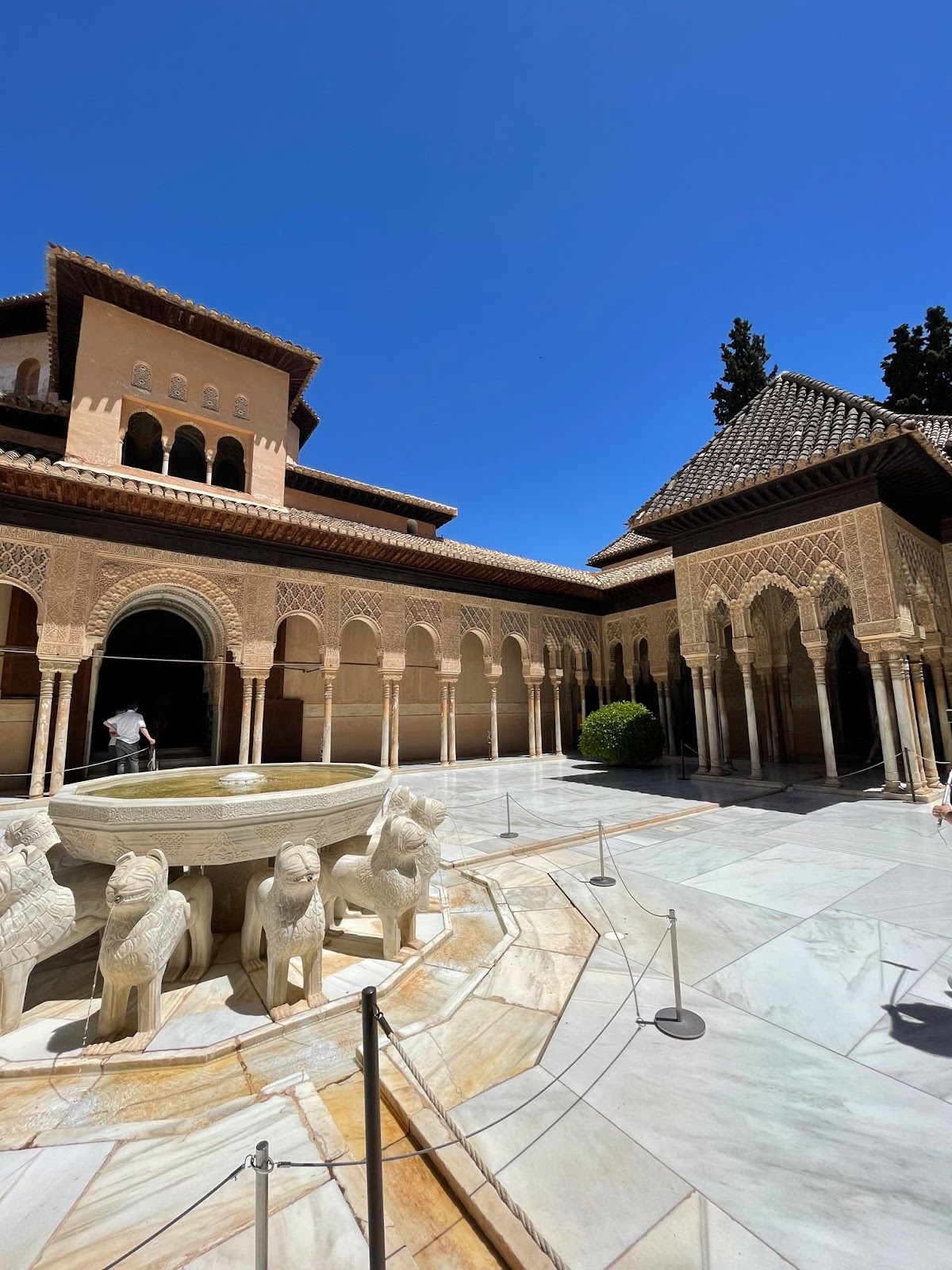
Es pedir mucho que escriba sobre el Palacio. Es uno de esos lugares donde solo los propios ojos pueden entender y apreciar la grandeza, el detalle, y la historia del lugar. Detalle, precisión, y geometría son las tres palabras que vienen a la mente para describir lo que vimos. Cada pared tiene inscripciones en árabe citando al Corán, y bordeando estas hay… ¿detalle? No encuentro la palabra. Creo que lo que más me fascinó fue la precisión con que hicieron todo. Los árabes eran especialistas en las matemáticas, y esto se ve reflejado en los Palacios Nazaríes. Para comenzar, las cúpulas y la precisión de los detalles con tan poca tecnología comparada con hoy es algo que fascina a cada persona que entre por las puertas del palacio. A continuación. ¿Cómo es que pudieran tener fuentes si estaban en la cima de una colina? La ingenuidad de los árabes y la presión del agua combinaron para crear fuentes que se encontraban alrededor de los patios. La uniformidad emparejada con la complejidad es algo que hace que la Alhambra sea única en el mundo arquitectural. El Patio de Leones era lo más magnífico. Siendo fotógrafo, puede sacar una foto donde parecía que no había ni una persona en el patio. Es fácil de imaginar a los Sultanes paseando por el patio consultado con su corte. No hay maravilla como ella, y es por eso que es uno de los monumentos más visitados del mundo.


Terminamos nuestro tour con una visita al Generalife. Tras un día lleno de andar y calor, era refrescante dar un paseo por la casa de verano de los sultanes. La fuente larga estaba adornada por rosales y otras plantas, y el agua nos salpicaba las piernas. El Generalife tiene un aspecto casi romántico.

Una visita a la Alhambra es una experiencia inolvidable. Las fotos que tengo no capturan de una manera adecuada la complejidad y la totalidad de la obra de arte. Si el blog valiera para algo, ojalá pudiera convencer a una persona que vaya a ver la Alhambra por sí mismo; quiero que se pierdan en los detalles, y cada rincón. Entonces, y solo entonces, esto será un éxito.

Sevilla (Spanish)

Written by: Riley Smith

Cuando llegamos a Sevilla, teníamos mucha información y un poco de familiaridad con Andalucía en nuestros bolsillos traseros. Esto nos permitió sumergirnos en esta nueva ciudad, la más grande en el Sur. Llegamos a la media tarde cuál fue la cantidad perfecta de tiempo para caminar todos juntos y aclimatarnos. Comimos una cena en grupo a través del río en un barrio se llama Triana. Cuando caminando a través del puente y disfrutando las vistas, aprendimos sobre la importancia del río Guadalquivir como el único puerto comercial hacia y desde las américas en los siglos 16 y 17. Era en la posición proteja perfecta y se transformó Sevilla en una ciudad ocupada y importante. Después del cine fue un tiempo muy emocionante para mí cuando miramos el partido del campeonato de la Liga Premier y …  ¡Madrid ganó! Estuvimos decepcionado que no podemos en Madrid para celebrar el gano, pero Sevilla no decepcionó con aclamares y cantando cuando su capital triunfó sobre Liverpool en la noche del sábado pasado. A mí siempre me ha gustado el fútbol y fue mola ver el ganó en esta atmósfera. 

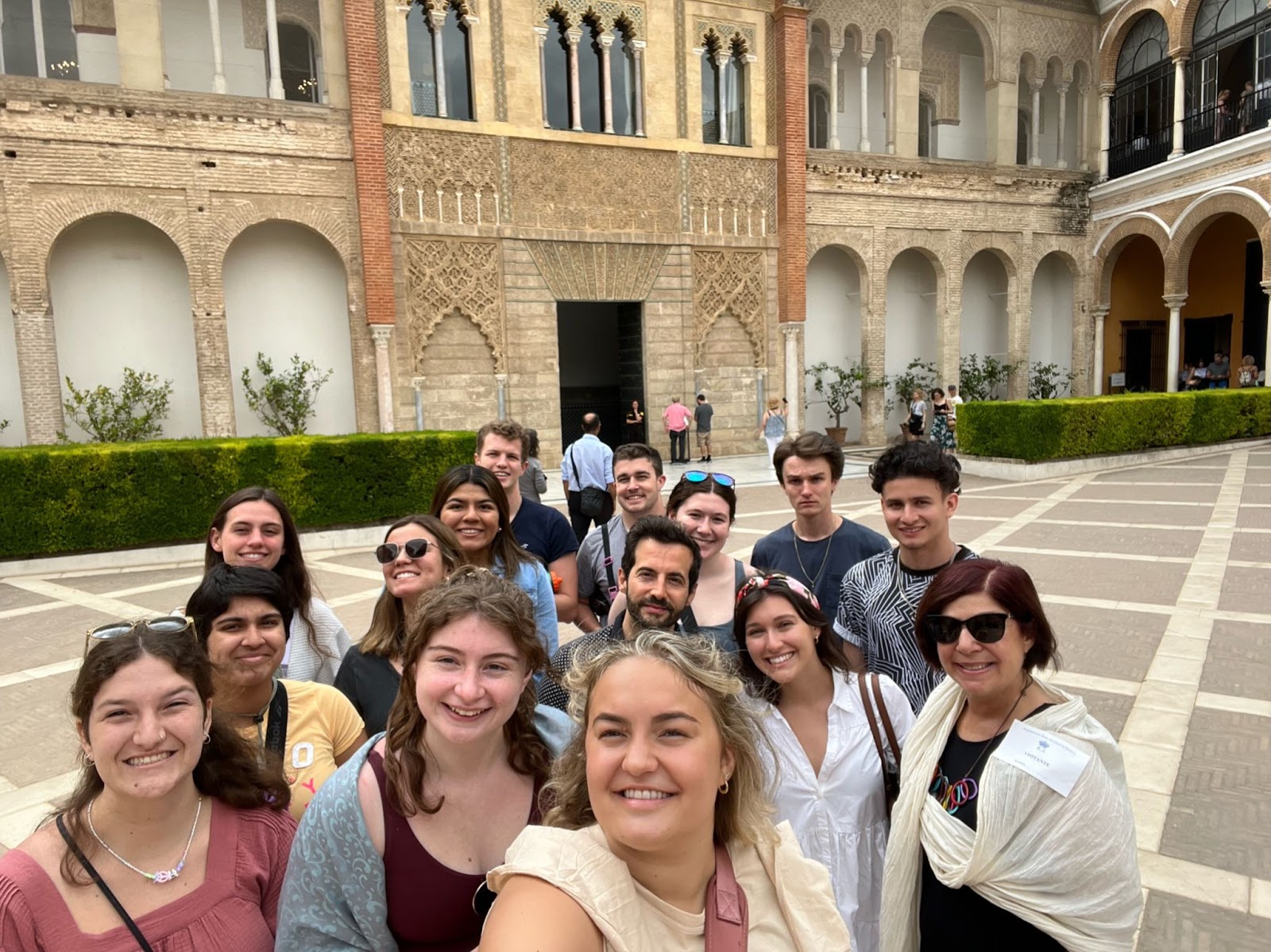
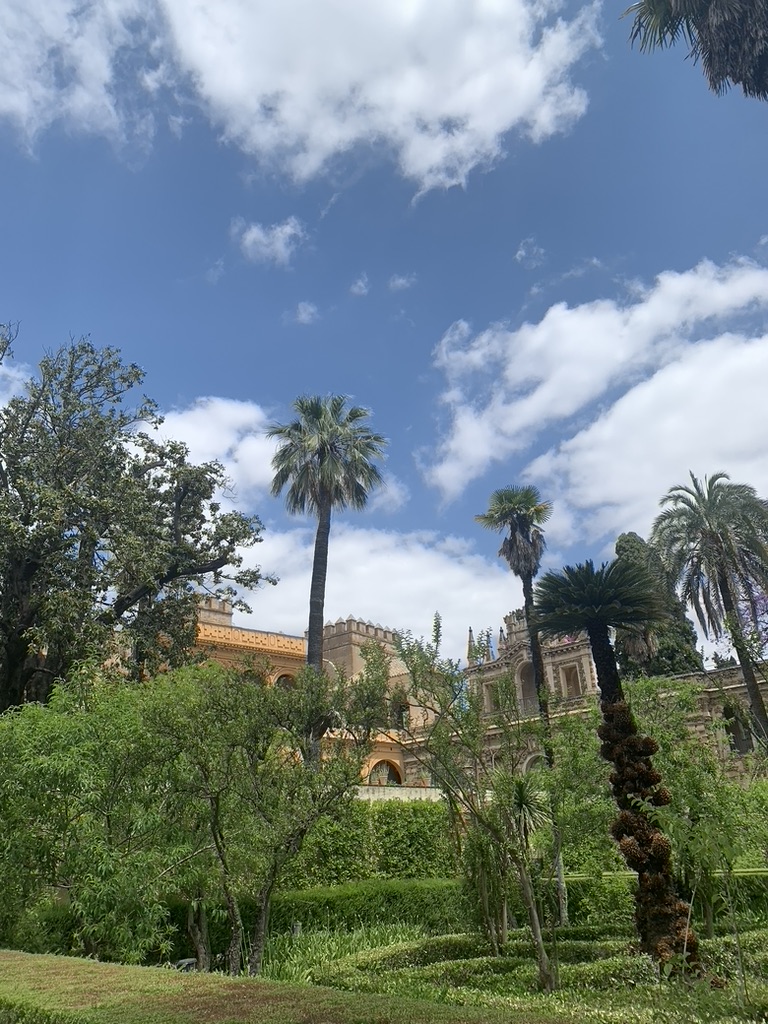
El próximo día el grupo visitamos las Reales Alcázares, solo algunas calles de nuestro hostel. Las Reales Alcázares son un gran e impresionante área que la mayoría fue construida cuando los Moros y christianos vivían juntos y tenían “convivencia” así que los edificios y architecture tienen aspectos tradicional de moros como tallas de yeso, fuentes de agua, y losas similar a La Alhambra. Además, las habitaciones reales y pinturas/ obras de arte cristianas. También hay un centro de comercio donde todo el comercio ocurría en esos días. Me pareció interesante y estratégico que se coloca junto al palacio real y creo que la colocación es un mensaje de quien es el jefe y quien recibía veinte porcentaje de los bienes. Me sorprendió la combinación de culturas y el marcado contraste cuando entramos al edificio cristiano más nuevo. También disfruté en los jardines y me enamoré de los hermosos árboles con flores moradas únicos de Sevilla. Después de pasamos tiempo en los reales alcázares, comí mi primera paella para almuerzo. Usualmente, tomamos dos a tres horas para comer porque de la cultura en España, los restaurantes son relajados y nadie está apurado mucho. Después de llenarnos de comida, exploramos la Catedral de Sevilla, la tercera catedral más larga en el mundo. La Catedral es muy diferente de los otros monumentos y catedrales y mis cosas favoritas eran el campanario y el altar mayor.

Durante la mañana del lunes, caminamos a la plaza de España. Pasamos un tarde más o menos relajados y pasamos tiempo en los bancos decorativos. Un momento que ninguno de nosotros olvidará, nos encontramos con un viejo que cantaba para nosotros. Los momentos en los que disminuimos la velocidad en la ciudad son cuando suceden momentos hermosos como ese. Después, tenemos tiempo para explorar más y volver a Madrid en la noche.