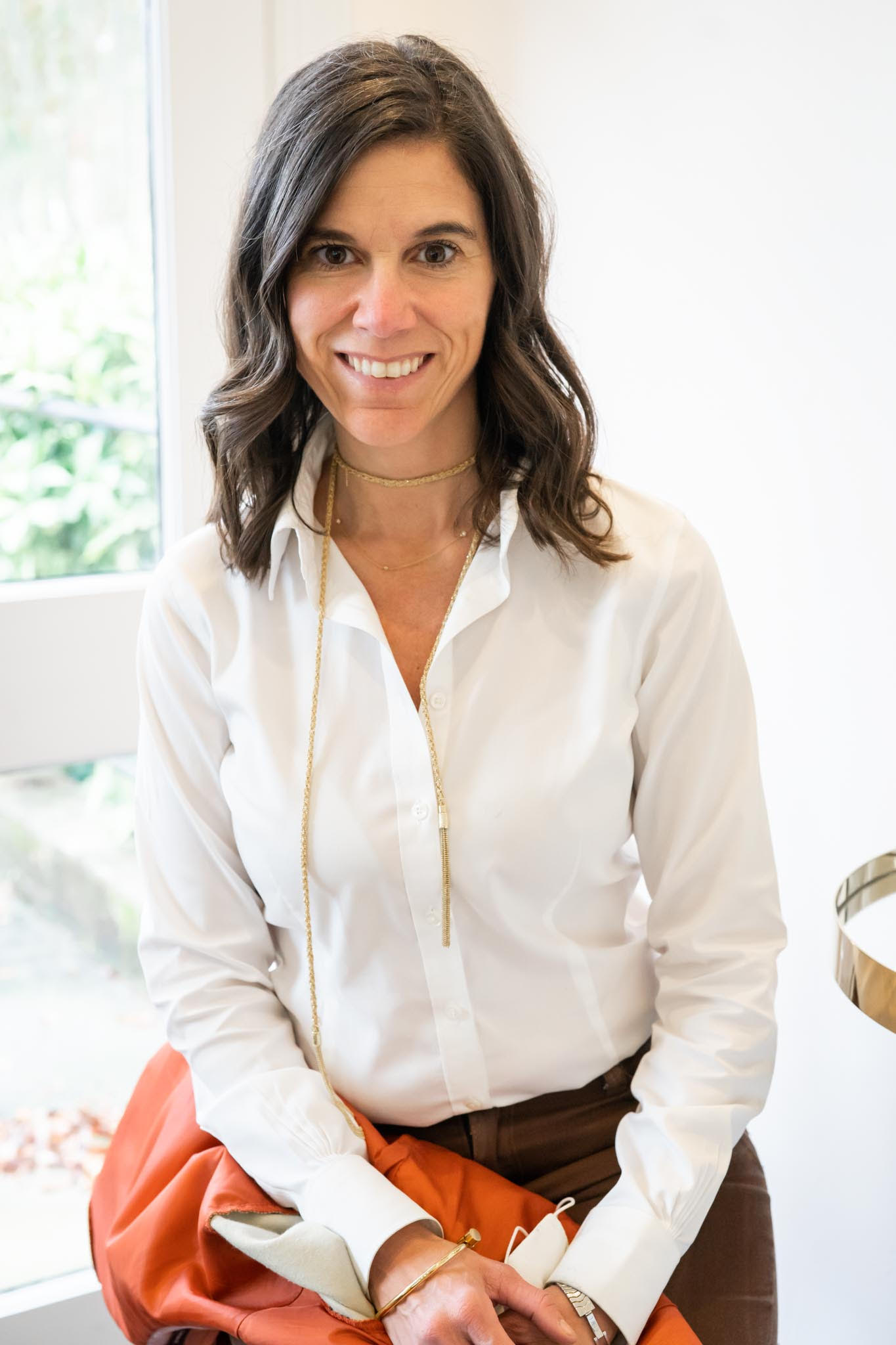
Meet Alumna Jennifer Lennon ’94, Clerk Magistrate at Commonwealth of MA Trial Court

Name: Jennifer Lennon

Class Year: 1994

Title: Clerk Magistrate

Organization: Commonwealth of MA Trial Court


1. In one sentence, what does your job entail?

I am the clerk magistrate of the Marlboro District Court


2. What planned and unplanned events connected you to your industry and your first employer after Holy Cross? How did you learn/decide it was a good fit for you? 

I went to law school after HC. While in law school I interned in the Middlesex DA office and became a prosecutor there after I passed the bar exam.


3. What were you involved in when you were on campus?

I was a big sister in the big brother/big sister program…I tutored Spanish speaking prisoners at the Worcester HOC in an effort to help them speak English, I was a member of Habitat for Humanity, and I tutored students at Belmont Community Elementary School in Worcester.


4. What was your major and how did it affect your career decisions?

My major was political science and I always knew I wanted to go to law school and become a lawyer.


5. What are one or two skills that you developed at Holy Cross that you use in your work?

At HC, I developed empathy for those less fortunate than myself and giving back to the community became an integral part of who I am.


6. What advice do you have for students on campus today?

Internships are one of the best ways to see if a profession is really for you. The HC alumni network is extremely strong and always willing to help out HC students so take advantage of it. Work hard but do not forget to make time to have fun and give back to others. Being a well rounded person is what managers really look for in a job candidate.

Meet Alumna Nikki Rutman ’96, Founder & Chief Intelligence Officer at Duck Cove Consultants

Name: Nikki Rutman

Class Year: 1996

Title/Organization: Sentinel, Managing Partner for Intelligence & Investigations; Duck Cove Consultants, Founder & Chief Intelligence Officer


1. In one sentence, what does your job entail?

Leading the intelligence team at a security consulting firm.


2. What planned and unplanned events connected you to your industry and your first employer after Holy Cross? How did you learn/decide it was a good fit for you? 

I was a biology major at HC which is not at all relevant to what I do now. I did internships to find my way to my former career in government intelligence which helped me transition to this role in the private sector.


3. What were you involved in when you were on campus?

Choir, radio


4. What was your major and how did it affect your career decisions?

Biology pre-med; neither applies to my career path but the critical thinking skills I developed learning the scientific methoda and the exposure to a liberal arts education showed me the world was my oyster!


5. What are one or two skills that you developed at Holy Cross that you use in your work?

Critical Thinking is key! Solid research skills and preparing and planning would be the others.


6. What advice do you have for students on campus today?

Reduce the time on social media and live! Academically, intern early and often!


7. What are your thoughts on how AI has impacted or will impact your industry? What advice do you have for students as they prepare to enter a professional world where AI is prevalent?

AI can’t think critically (not yet and hopefully never) – humans must be in the loop so be the human in the loop that let’s AI help you clear your plate so you can think critically and strategically. Let AI handle the mundane tasks that it can’t hallucinate on. Don’t become a prompt monkey and be mindful of cognitive offloading.

Meet Alum Kirk Chartier ’86, Chief Strategy Officer at Enova International

Name: Kirk Chartier

Class Year: 1986

Title: Chief Strategy Officer

Organization Name: Enova International


1. In one sentence, what does your job entail?

Establish business strategy based on market and regulatory opportunities and ensure we are positioned to make desired returns.


2. What planned and unplanned events connected you to your industry and your first employer after Holy Cross? How did you learn/decide it was a good fit for you? 

I was a Marine Officer and NROTC student. In the Marines I flew helicopters, went to military schools, and obtained an MBA. When I left the Marines, a corporate recruiter looking for military officers to join corporations reached out to me through a friend and I had lunch – that person connected me to a USMC and Holy Cross alum who connected me to someone at GE who was hiring.


3. What were you involved in when you were on campus?

NROTC, intramurals , cross- enrollment at WPI


4. What was your major and how did it affect your career decisions?

Economics and Civil Engineering. Economics is a long term thinking discipline and fit naturally with business strategy


5. What are one or two skills that you developed at Holy Cross that you use in your work?

Intellectual rigor and curiosity – consider problems from three sides. Confluence of liberal arts and science in the natural world – there is a deeper truth to things that we can uncover through study and which leads to stronger and longer lasting solutions.


6. What advice do you have for students on campus today?

First – build computer knowledge and skills no matter what your major is. Second, Build knowledge that is deeper than current trends and beliefs – shallow things change over time but deeper knowledge of disciplines helps guide thinking.


Meet Alum Nicholas Fasano ’14, Director, Government & Community Relations at Metropolitan Transportation Authority

Name: Nicholas Fasano

Class Year: 2014

Organization Name: Metropolitan Transportation Authority

Title: Director, Government and Community Relations


1. In one sentence, what does your job entail? 

I am the main point of contact for all Federal, State, Local elected officials and municipalities on Long Island and in parts of NYC.


2. What planned and unplanned events connected you to your industry and your first employer after Holy Cross? How did you learn/decide it was a good fit for you? 

HC did not really factor into connecting me with my current employer but it did equip me with the tools of discernment necessary to determine that being here is a good fit for me!


3. What were you involved in when you were on campus?

Rugby, Study Abroad, SPUD, Communion Ministry


4. What was your major and how did it affect your career decisions?

History. I had a general sense that I wanted to work in Government but I think my major in History gave me a broad understanding of the impact government’s have on how societies succeed and fail.


5. What are one or two skills that you developed at Holy Cross that you use in your work?

Time management and critical thinking.


6. What advice do you have for students on campus today?

Take advantage of everything that HC has to offer! College is a time for discovery and the best way to do that is by trying new things that you will almost certainly not have the opportunity to get involved in after school!

Meet Alumna Claire Luke ’10, Program Officer at The U.S. Department of State

Name: Claire Luke

Class Year: 2010

Title: Program Officer

Organization Name: The U.S. Department of State


1. In one sentence, what does your job entail?

I manage or co-manage the State Department’s 40 federal grant awards globally that strengthen rights for workers.


2. What planned and unplanned events connected you to your industry and your first employer after Holy Cross? How did you learn/decide it was a good fit for you?  

My career is a result of natural progression of following my passions and purpose. I was a journalist through my 20s, living in various countries and in DC reporting on international development, human rights- specifically labor rights- and shining light on abuses along supply chains. At HC, I knew I wanted to pursue the path of international affairs and journalism and acquire different experiences in various countries that would build a strong foundation of knowledge to then parlay into higher level policy and programming. My internship in NBC’s political unit during the Washington Semester program taught me I was interested in more global vs domestic reporting, and more socio-political vs traditionally political. I used the HC alumni network to help build journalism contacts, and while stringing for the Boston Globe in Boston I was accepted to work as a journalist abroad for the principal newspaper in Cambodia, opening the door to a journey of intense and immersive learning at the grassroots level in the international and communication fields! After further reporting in Nicaragua, Burma and Eastern Europe, primarily on labor rights, I then gravitated away from reporting  on labor rights and working on a deeper level to address them directly through programming. Graduate school in DC allowed me to hone in more to technical assistance programming and labor expertise, resulting in working with the World Bank, UN, social enterprises focusing on labor rights and supply chains, and ultimately to my current role (and dream job!) with the State Department, where I promote labor rights in accordance with US democratic principles to the most marginalized workers most egregiously exploited in the global trade system in the most challenging of operating environments around the world.

There was a bit of trial by error in the first steps of this journey. After HC graduation, I wanted to try living in Boston to be near networks, and worked at a PR firm found through networking. While I loved the city, the work itself was meaningless and shallow to me, and I realized that I did not wish to spend another day of this finite life without devoting my skills, passion and life force to mission-oriented service work, the global epicenter of which lies in DC. This was an invaluable lesson- to listen to the gut more than anything and not fake or force; I believe we all have our gifts that align with our purpose and shouldn’t have to ‘fake it til you make it’ to any unsettling extent.


3. What were you involved in when you were on campus?

Cross country and track; dance team; Philosophy Student Advisory Committee; writing and editing for two newspapers (Crusader and Advocate) and the HC Office of Public Affairs; Washington Semester program; Kenya study abroad program; tour guide, Appalachia Spring Break program, Manresa; Summer Internship Program (financial journalism in NYC)


4. What was your major and how did it affect your career decisions?

Philosophy major (focus on political and ethical) and peace and conflict studies, which was the closest thing at the time to international affairs! 

I initially wanted to study journalism, but am ultimately glad we received the well rounded liberal arts education that served as a fantastic foundation in the field of journalism, the technical skills and mechanics of which one can learn through the job but the deep understanding of political and economic structures came through the HC education.

The social justice and service-oriented mission and drive to make any sort of footprint of positive change that translates to real people and their lives on any significant scale that flourished at HC definitely translated into my career journey and current role. And spiritually, upholding the dignity,  value and rights of each and every human life and worker who are the backbone of the global supply chain that I do in my work now is rooted in my faith that was able to exist alongside my studies at HC.

I say if you can think well, you can do anything! Philosophy honed our skills in writing, debating, logic, dissecting arguments, deciphering fact vs fiction, and contemplating the structures behind what we see. HC’s excellent philosophy department, especially Professor Lawrence Cahoone as advisor on my DC thesis on ethics of humanitarian intervention who encouraged me to pursue this path, and Prof Maria Granik who served as an example of a strong, brilliant woman in political philosophy, fundamentally enriched my journey.

For political science, Professor Judith Chubb was strongly instrumental in leading an interest into international development! The Kenya study abroad program she developed was my first time traveling abroad, was an immersive awakening to poverty, and gave students a structural understanding of social injustice on the global scale. Profs Maria Rodriguez and Cass Loren also fed the interest in international economies, development and inequality.


5. What are one or two skills that you developed at Holy Cross that you use in your work?

The awareness of inequalities and pursuit of ensuring the human aspect and rights of every person are recognized and represented at the highest levels possible.

Strong writing skills and presenting information thoughtfully, initiative in thinking beyond what is presented but proposing ideas out of the proverbial box. 

Also, Spanish! I kept up with language courses at HC and use the Spanish in my work on Latin America.

From my HC track and cross country coach- that there are no shortcuts to hard work. That you want to ultimately be proud of the person you see in the mirror. That playing small doesn’t serve anyone and to lead by example. That teamwork is important, as is respecting different ideas and everyone has something to say. To not waste energy on overthinking events in anxiety but be present.


6. What advice do you have for students on campus today?

Get involved in as much as you can while you have the rich exposure to multidisciplinary resources in order to help hone down your interests. This is your time to explore and intentionally form your identity and future possibilities! Have fun and enjoy these four years and don’t be afraid to play around with interests in trial by error. Remember to follow your heart and think about how you want to use this life in accordance with your skills and interests versus what other people may think. Know that there are many options for non-traditional career paths and that you can indeed make a stable, lucrative career out of helping others. For women especially- to not over-compromise or over-accommodate to others in your pursuits as an individual.


Meet Alum Marc Trigilio ’96, Head, Legal Crop Protection North America

Name:  Marc Trigilio

Class Year: 1996

Title:  Head, Legal Crop Protection North America

Organization Name: Syngenta Crop Protection, LLC


1. In one sentence, what does your job entail?

I lead the Legal department for our US and Canada crop protection business, which requires me to develop and drive legal and business strategy, manage complex litigation and regulatory issues, protect our intellectual property, and enable our business to deliver solutions to help farmers produce food for people in an efficient and sustainable manner.


2. What planned and unplanned events connected you to your industry and your first employer after Holy Cross? How did you learn/decide it was a good fit for you? 

I certainly never planned on being an attorney.  I was in the pre-med program, so clearly planning out my career was not a strong suit. The unplanned event that had the most impact on my career (and life) was, at the recommendation of several friends, completing the Spiritual Exercises of St. Ignatius of Loyola my senior year. It was during that week of self-reflection and prayer that I made the pivot in my career direction.  It led me to law school (where I met my wife) and to my first employer after Holy Cross.  I feel incredibly blessed because I can always look back at my journal from that week and see the day/time entry when I made that decision.


3. What were you involved in when you were on campus? 

I did a variety of activities at Holy Cross – intramural sports (soccer and football), S.P.U.D. programs with kids at local elementary schools and Catholic churches, and various internships.


4. What was your major and how did it affect your career decisions?

I was a Psychology major and in the pre-med program at Holy Cross.  I also considered a minor in Spanish, but I decided against it (which was a mistake).  I ultimately chose law for a career and Psychology has been incredibly helpful working in a large, diverse multinational organization.  With so many theories in Psychology about what drives behavior, I learned to always keep an open mind to understanding others’ possible motivations and concerns, even when they differed from mine.  That has allowed me to work with diverse teams and people throughout the business globally and to manage the needs and concerns of the individuals on my team.


5. What are one or two skills that you developed at Holy Cross that you use in your work?

The Jesuit principle of being men and women for others is something I think of every day – I view my role as helping others and helping my company in the important work of helping to feed the planet.


6. What advice do you have for students on campus today? 

Have fun, work hard, make friends, and be open to new experiences and ideas – you never know what you may end up liking.  Enjoy it all because it passes really quickly.  When you graduate, stay connected – Holy Cross has a tremendous alumni community, we want to help, and we are here for you.

Meet Alum Michael Cole ’16, Community Relations Coordinator

Name: Michael Cole

Class Year: 2016

Job Title: Community Relations Coordinator

Organization Name: Office of Mayor Thomas McGee, City of Lynn


1. In one sentence, what does your job entail? 

As Community Relations Coordinator for Mayor McGee, my job is to manage all questions or concerns residents have and to connect them with the appropriate resources or city department.


2. What planned and unplanned events connected you to your industry and your first employer after Holy Cross? How did you learn/decide it was a good fit for you?

One event that connected me to my industry and my first employer after graduating from Holy Cross was Working for Worcester. Through Working for Worcester, I established a relationship with Tim Garvin, CEO of the United Way of Central Massachusetts, which led me to my first job after graduation as a Community Relationship Manager at the United Way. I decided it was a good fit for me because I knew the work being done within the non-profit/political sector had a direct impact on people’s lives every day. The entire process of Working for Worcester, from the planning stages to the annual Build Day, provided me with a glimpse into what that would be like to work in an industry that directly impacts it’s community on a daily basis. Working at the United Way allowed me to further see the importance of this kind of work being done every day throughout Worcester. Even though I have moved on from the United Way, I still work in a position with the goal of positively influencing our entire community.


3. What were you involved in when you were on campus? 

On campus I was a Kimball Captain, involved in Working for Worcester as the Director of Site Development and a Site Manager, Study Abroad in La Coruña, Spain, SPUD, Spring Break Immersion, Club Golf, Intramural Basketball and Soccer.


4. What was your major and how did it affect your career decisions?

I was a double major in Political Science and Spanish. In my current position, I have the unique opportunity to be utilizing both of my majors in my job. Not only do I gain experience working in a mayor’s office from a political science perspective, but the City of Lynn has a large Spanish-speaking population as well. Every day I am speaking Spanish to residents over the phone, in the office, or publishing the Mayor’s social media posts in both English and Spanish.


5. What are one or two skills that you developed at Holy Cross that you use in your work?

Two of the most important skills I developed at Holy Cross are the ability to multi-task and to analyze large amounts of information on a variety of subjects from multiple angles. These are incredibly vital in being able to effectively communicate the takeaways from my conversations with residents or other colleagues back to either the Mayor or fellow staff.


6. What advice do you have for students on campus today?

I would advise today’s students to first and foremost, appreciate all the time you have at Holy Cross, nothing in the real world compares to our Holy Cross experience. Also, it is ok if you are uncertain about exactly what career you want to pursue. I know I, along with many of my friends, walked across the graduation stage unsure of what our futures would hold, but Holy Cross will prepare you to figure things out along the way. Follow your passions, be open to new challenges, embrace different ideas and never stop learning.

Meet Alumna Paige Cohen ’21, Junior Consultant – Human Services

Name: Paige Cohen

Class Year: 2021

Title: Junior Consultant – Human Services

Organization Name: Public Consulting Group


1. In one sentence, what does your job entail?
 
In my role, I support projects with state human services agencies, helping agencies design and evaluate programs (examples might be TANF, SNAP, or workforce development programs), increase revenue/cut costs, and ensure regulatory compliance.


2. What planned and unplanned events connected you to your industry and your first employer after Holy Cross? How did you learn/decide it was a good fit for you?  
 
I first learned about Public Consulting Group (PCG) through a simple LinkedIn job search in the fall of my junior year at Holy Cross, when I saw their posting for a summer internship. After going to the PCG website, I became really intrigued by the concept of public sector consulting and how private businesses can help support state and local governments. I applied, and through more LinkedIn networking, realized that Stephen Skinner, their Director of Marketing, is an HC alum. I connected with Stephen, and he supported me through the interview process and helped me secure my internship with the PCG Marketing team in summer 2020.


I really enjoyed my internship, but I was hoping to transition to the consulting side of the business, as I wanted to dig more into policy work. The more limited job market of early 2021 and my lack of quantitative skills made it challenging to land that consulting job right out of Holy Cross. I ended up taking another job doing internal strategy and operations at L.E.K. Consulting for a year after graduation. While at L.E.K., I focused on learning as much as I could about the consulting industry and building up my quantitative/analytical skills. I always kept an eye out for PCG job postings, and in April, I saw an opening for a Junior Consultant role. I emailed Stephen right away to let him know I was applying, and I was delighted to accept a job offer in May. I’ve been in my role for about 6 weeks now and am having a great experience so far.


3. What were you involved in when you were on campus?
 
While I was on campus, I was a member of the Varsity Rowing team. I was also a Community-Based Learning Intern, an SGA Cabinet member, and Political Science Student Advisory Committee member.


4. What was your major and how did it affect your career decisions?
 
I was an English and Political Science double major. I’ve always loved Literature, and the English major gave me a foundational skillset in good writing, reading, and communication. Political Science offered me an application for that skillset, as I thought through and wrote about issues of public policy. My interest in this intersection of policy and communications led me first to an internship at the State Department in the summer of 2019 and then to PCG as both an intern and now a full-time employee.


5. What are one or two skills that you developed at Holy Cross that you use in your work?
 
Critical thinking and policy analysis are two skills that I developed at Holy Cross that I use often in my work at PCG. Throughout classes at Holy Cross, we were called to “ask more”— to not just memorize information but to think critically about what we were learning. I have to do this sort of critical thinking often at work, as we think about how to make state programs operate more efficiently. I also took several public policy classes at Holy Cross, where I studied and debated many of the government policies that I work with now at PCG.


6. What advice do you have for students on campus today?

Be patient! Even if your first job or your first internship isn’t what you wanted, there are many paths to take in your career and your first job is just a first step. Try to make the most of any opportunity you are given at work to build up your skills, so that you are prepared for your next move.

Meet Alumna Alisson Klaiber ’05, Legal Advisor to the Commission at Virginia State Corporation Commission

Name: Alisson Klaiber

Class Year: 2005

Title: Legal Advisor to the Commission

Organization Name: Virginia State Corporation Commission

1. In one sentence, what does your job entail?

I advise the Commissioner on legal matters and defend the Commission in appellate court.

2. What planned and unplanned events connected you to your industry and your first employer after Holy Cross? How did you learn/decide it was a good fit for you? 

 I’ve wanted to be a lawyer since I was eleven years old, so I went to law school right after I graduated from Holy Cross.  My first job after law school was with the law firm of Hunton Andrews Kurth, in their Energy & Project Finance Group. I am a dual citizen of France and the United States and fluent in both French in English. I was hired by the firm to help with Project Finance transactions all over the world. However, it was 2008 and the world financial crisis occurred. Project Finance is a risky investment so lots of the work paused or ended.  The firm asked me to pivot and assist in matters before the United States Federal Energy Regulatory Commission, which regulates energy and hears cases on all types of energy matters here in the United States.  I realized doing this work that I wanted to be back in the courtroom. A few months later, I was laid off along with all the junior attorneys in my practice group due to the financial crisis.  Upon hearing about me at a luncheon and after seeing my resume, Florida Power & Light Company invited me to come assist in their rate case, a case in which a utility asks its regulator to increase its electric rates, i.e., your bills. It was an opportunity for me, as a young lawyer, to be in court but still work with numbers, engineering and the more technical issues that I like. After that case concluded, I returned to my home in Richmond, Virginia.  I realized while working in Florida, that working for the Virginia State Corporation Commission, the body that regulates utilities in Virginia, would offer me an extraordinary opportunity to be in the courtroom regularly early in my career. I joined the Virginia State Corporation Commission, the body that regulates utilities in Virginia in 2010, after a brief period working at the Virginia Attorney General’s office. I spent a decade trying energy cases on behalf of the Office of General Counsel at the Commission, until last Spring when the Judge asked me to be her personal legal advisor.

3. What were you involved in when you were on campus?  

I joined the debate club, tennis club, and international students club. I was a peer counselor and spent some time volunteering with the Campus Activities Board.

4. What was your major and how did it affect your career decisions? 

I was a double major in International Relations and Economics, with a concentration in French. I could not have practiced energy law without my background in economics.  I use my degree in economics daily. My degree in international relations has helped me navigate state government.

5. What are one or two skills that you developed at Holy Cross that you use in your work?  

Majoring in economics was tough for me.  A Justice of the Supreme Court once told me that to become wiser, you must pursue that which is difficult.  During my sophomore year at Holy Cross, he told me to stick with my economics major despite some mediocre grades.  I took his advice and my grades eventually improved. I’ve kept that advice throughout my entire career.  When I don’t understand something, I figure it out.

The second skill is the 1-3 sentence elevator pitch.  For example, for career purposes, be able to say in 1-2 sentences who you are and what you’d like to become.  Keeping this elevator pitch fine tuned helps me stay focused on the big picture and what I want to accomplish in my career.

6. What advice do you have for students on campus today?

My advice is to stay focused, but to be open to different paths and the unexpected. Many times, I’ve seen interns turn down great opportunities because such opportunities did not concern the type of law they wanted to practice.  While it is good to stay focused, be open to what the world offers you, you never know what you might learn or who you might meet if you keep an open mind. If I had stuck to my career path the traditional way, I would not have had such a fulfilling and successful career.

Meet Alumna Christina Lindberg ’11, Associate at Miner Siddall LLP

Name: Christina Lindberg

Class Year: 2011

Title: Associate

Organization Name: Miner Siddall LLP


1. In one sentence, what does your job entail?

I represent individuals and corporations in a variety of civil and criminal matters in state and federal courts.


2. What planned and unplanned events connected you to your industry and your first employer after Holy Cross?

I knew I wanted to attend law school by my junior year. Through the SIP Program, I found a summer internship with JP Morgan’s intellectual property law department. I took an LSAT prep course on campus during my senior year and consulted with my professors about my plans. At my next internship, I explored criminal law as an intern with the Committee for Public Counsel Services. To find my first position out of law school, I went through the typical on campus interview process and I was happy to secure a position as an associate at a law firm in Boston.


3. How did you learn / decide it was a good fit for you?

I enjoy the variety of litigation work. I spend a substantial amount of time researching and writing motions, but I am also in court or in depositions regularly. With each new case, I learn about new industries and how the law applies to the particular facts of my case.


4. What were you involved in when you were on campus?

I was involved with an SAT tutoring program and an afterschool tutoring program for younger students. I was also a staff writer for the student newspaper.


5. What was your major and how did it affect your career decisions?

As an English major, I spent a lot of time reading, researching, and writing. I knew I wanted to continue that in my career through litigation work.


6. What are one or two skills that you developed at Holy Cross that you use in your work?

My professors at Holy Cross always gave constructive feedback and pushed me to think outside the box. I try to use that same creative thinking every day when I’m brainstorming arguments and writing a brief.


7. What advice do you have for students on campus today?

Take advantage of the strong Holy Cross alumni network. Over the years, alumni have been a great resource for me. Don’t wait until you’re applying for a job. Reach out to alumni when you find their career path or current position interesting. A quick thirty minute chat is a great way to get to know someone and make a new connection.