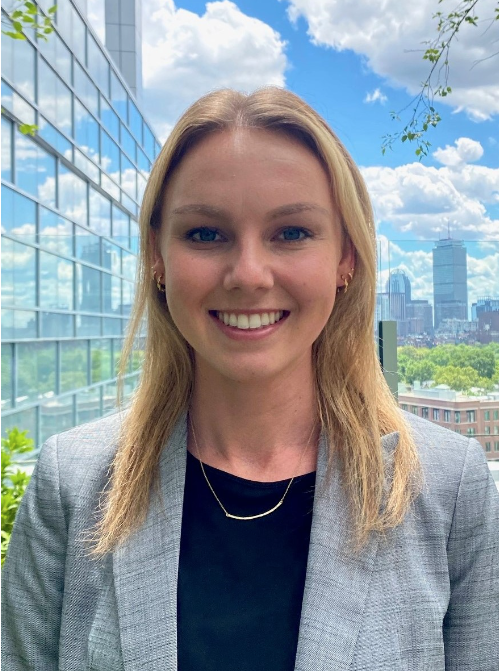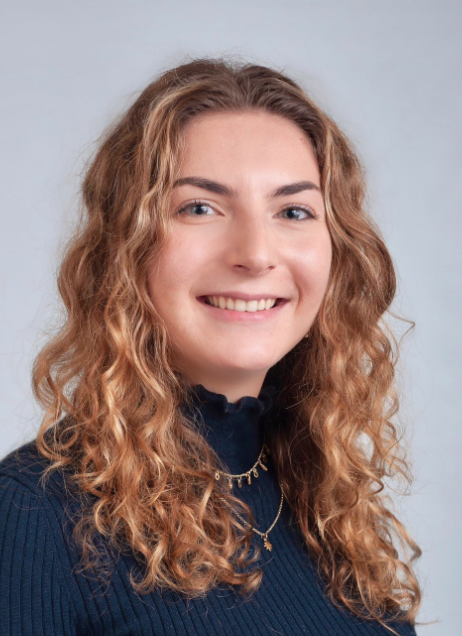

Meet Alumna Emily Primavera ’23, Registered Nurse at UMass Memorial Medical Center

Name: Emily Primavera

Class Year: 2023

Title: Registered Nurse

Organization: UMass Memorial Medical Center (Marlboro Campus)


1. In one sentence, what does your job entail?

Caring for multiple acutely ill patients from admission to the discharge process.


2. What planned and unplanned events connected you to your industry and your first employer after Holy Cross? How did you learn/decide it was a good fit for you? 

After Holy Cross, I immediately entered an accelerated master’s program for nursing and earned my MSN,RN at Johns Hopkins University. My weekly meetings with Cameron Smith in the Career Center and events held by the Pre-Nurse Practitioner Club were very helpful in the application process for school. After passing my nursing licensure exam, I attended nurse hiring events for different hospitals in the greater Boston area and connected with both Holy Cross and Hopkins alumni who were nurses at hospitals I was interested in to learn more. Ultimately I decided the Medical-Surgical floor at UMass Marlboro was a good fit for me because it allowed me to continue growing the foundational skills I had learned in school and offered within a nurse residency program and offered room to grow within the UMass system and explore multiple different nursing specialties!


3. What were you involved in when you were on campus?

I was the co-chair of both Dance Marathon and the Nurse Practitioner Club, I worked on campus at the Jo, a peer mentor, and I was a tour guide!


4. What was your major and how did it affect your career decisions?

I majored in Psychology with a minor in Philosophy and a GSWS concentration on a pre-nursing track. Taking both humanity and science courses allowed me to understand the ways in which social factors could impact an individual’s health or access to healthcare, which led me to want to work in a smaller community hospital that doesn’t have as many resources as the larger city campuses.


5. What are one or two skills that you developed at Holy Cross that you use in your work?

Time management is something I use every shift, knowing how to prioritize different tasks and how to efficiently but also effectively provide patient-centered care. I don’t know if this is considered a skill, but also the importance of prioritizing mental health is something I learned at Holy Cross. I can’t provide the best possible care for my patients if I am burnt out and knowing how to care for myself on days I’m not working or knowing when to get help during shifts is super important.


6. What advice do you have for students on campus today?

Take advantage of all of the resources on campus! Try new things and activities, take classes that may be a little out of your comfort zone if they sound interesting, and definitely utilize the Career Center (seriously cannot thank Cameron enough for all of his support and help throughout the years)!!


7. What are your thoughts on how AI has impacted or will impact your industry? What advice do you have for students as they prepare to enter a professional world where AI is prevalent?

PLEASE do not use AI to cheat through nursing school because in your career there will be instances when patients are critically ill and knowing what to do or recognizing a decline in status can save someone’s life.
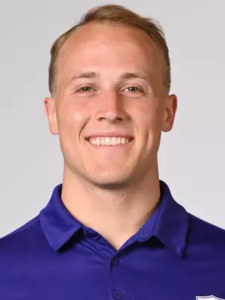
Meet Alum Nathan Marconi ’24, Medical Assistant at Boston Bone & Joint Institute


Name:
Nathan Marconi

Class Year: 2024

Title: Medical Assistant

Organization Name: Boston Bone & Joint Institute


1. In one sentence, what does your job entail?

Taking medical history, assisting with in office procedures and injections, dispensing DME, and many other medical related tasks.


2. What planned and unplanned events connected you to your industry and your first employer after Holy Cross? How did you learn/decide it was a good fit for you? 

BBJI presentation at holy cross. Orthopedics and its relation to sports injuries and hands-on clinical experience.


3. What were you involved in when you were on campus?

Rugby


4. What was your major and how did it affect your career decisions?

Biology, introduction to clinical research and experience.


5. What are one or two skills that you developed at Holy Cross that you use in your work?

Communication, research


6. What advice do you have for students on campus today?

Networking with individuals of interest

Meet Alum Peter Oliver ’22, Medical Assistant at Orthopedic Associates of Marlboro

Name: Peter Oliver

Class Year: 2022

Title: Medical Assistant

Organization Name: Orthopedic Associates of Marlboro (OAM)

1. In one sentence, what does your job entail?
Rooming patients, assisting with office procedures, answering phone calls and assisting with insurance authorizations.


2. What planned and unplanned events connected you to your industry and your first employer after Holy Cross? How did you learn/decide it was a good fit for you? 

I developed an interest in musculoskeletal medicine while playing football in undergrad. I needed patient/clinical experiences and OAM was the perfect place to make this happen.


3. What were you involved in when you were on campus?

Varisty Football, Chapel Choir, Spanish Club, LASO

4. What was your major and how did it affect your career decisions?
Chemistry and Spanish. I use Spanish daily in clinic.


5. What are one or two skills that you developed at Holy Cross that you use in your work?
Critical thinking, interpersonal competencies, and Spanish fluency.


6. What advice do you have for students on campus today?
SHADOW PEOPLE!! This is the only way you can truly understand what the day to day life is like in a certain profession. Otherwise, it is just words on paper.

7. What are your thoughts on how AI has impacted or will impact your industry? What advice do you have for students as they prepare to enter a professional world where AI is prevalent?
I am very excited about AI in medicine. Not only will it advance biotechnology, it will also make a physician’s life easier when it comes to charting and insurance approvals. It will also be a good consultant.

Meet Alum Joe Ciccone, MD ’97, Chief of Urologic Surgery at Optum MA

Name: Joe Ciccone, MD

Class Year: 1997

Organization Name: Optum MA

Title: Chief of Urologic Surgery


1. In one sentence, what does your job entail?

 Caring for patients with both surgical and non-surgical conditions of the urinary system in men and women. 


2. What planned and unplanned events connected you to your industry and your first employer after Holy Cross? How did you learn/decide it was a good fit for you?  

Through a family connection I met Noelle Lawler, a PA at what was then Harvard Vanguard’s Fenway office. As a starving art student, she gave me a job as a medical assistant when I was about 21 and the rest was history. 


3. What were you involved in when you were on campus?

 Football, Track, Improv Comedy, and was an English Major with a concentration on writing (poetry).


4. What was your major and how did it affect your career decisions?

 My English major led me to graduate school at Emerson College. This experience was enough to know that a career as a writer was not for me. 


5. What are one or two skills that you developed at Holy Cross that you use in your work?

Certainly writing and communication are major skills for a surgeon and department leader. Mostly, I learned how to challenge myself intellectually and physically. Both of these skills allowed me to succeed in medical school and residency while managing a young family. 


6. What advice do you have for students on campus today?

Play the slow game. Take classes across multiple disciplines and become well-rounded and maximally enriched. Do not feel pressured to get into medical school as soon as humanly possible. Enjoy the ride. Travel. Be with friends. 

Meet Alumna Emma Keane ’22, Clinical Research Coordinator at Mass General Brigham

Name: Emma Keane 

Class Year: 2022

Organization Name: Mass General Brigham 

Title: Clinical Research Coordinator


In one sentence, what does your job entail?

I conduct research and deliver psychosocial and behavioral health interventions to cancer patients navigating complex treatment regimens and survivorship challenges, as well as to their caregivers, with the goal of improving health outcomes and enhancing quality of life.


What planned and unplanned events connected you to your industry and your first employer after Holy Cross? How did you learn/decide it was a good fit for you?  

I really enjoyed my psychopathology course at Holy Cross, where many discussions with Professor Berman about career opportunities in the field sparked my interest in pursuing a PhD in Clinical Psychology. Concurrently, I worked in an undergraduate research lab and became very interested in expanding my methodological tools and research skills. After graduation, I spent a year on a Fulbright scholarship working in an international research lab studying well-being in the workplace. This experience sparked my interest in applying this work to the health sector, particularly in studying ways to enhance the quality of life for patients with chronic illnesses, so I began searching for Clinical Research Coordinator positions at academic medical centers.


What were you involved in when you were on campus?

During my time on campus, I worked with the Office of Admission as a tour guide and Senior Admissions Fellow. With the Student Programs for Urban Development, I mentored and tutored young girls and served as a Community Organizer, collaborating with Worcester government leaders to promote systemic change and civic engagement. I participated in Spring Break Immersion and had the opportunity to lead a trip during my senior year. I also enjoyed participating in Club Basketball.


What was your major and how did it affect your career decisions?

I double-majored in Psychology and German Studies and was motivated throughout my time at Holy Cross to pursue a Fulbright Scholarship to further explore the synergy between both fields. During my time in Germany, I taught English and worked in an international research lab studying well-being in the workplace. This further inspired me to gain research experience in Health Psychology and Psycho-Oncology before pursuing a PhD in Clinical Psychology.


What are one or two skills that you developed at Holy Cross that you use in your work?

One of the most important skills I developed at Holy Cross was a strong sense of intrinsic motivation. I learned to pay attention to the activities and courses that provided inherent satisfaction and enjoyment. By consistently approaching each opportunity through this lens, I was able to identify a field of work that I love. This sense of satisfaction now serves as the core motivation behind my work, guiding my professional trajectory. 


What advice do you have for students on campus today?

A cornerstone of a Holy Cross education is the guidance and mentorship provided by supportive professors and faculty members. They are committed to leveraging their expertise to help students navigate their interests and passions. I recommend getting to know your professors well and taking full advantage of their office hours. You may be just one conversation away from discovering your next chapter and securing a stellar letter of recommendation.

Meet Alumna Sara Guay ’22, Research Technician at Massachusetts General Hospital

Name: Sara Guay 

Class Year: 2022 

Title: Research Technician 

Organization Name: Massachusetts General Hospital 


1. In one sentence, what does your job entail? 

 I work together with post-doctoral fellows to conduct experiments related to breast cancer therapeutics and diagnostics. 


2. What planned and unplanned events connected you to your industry and your first employer after Holy Cross? How did you learn/decide it was a good fit for you? 

My mentor, Professor Findlay, helped me connect to the science industry by guiding me through an independent research project. During my last year on the Hill, a primary investigator from Massachusetts General Hospital (MGH) reached out to the biology faculty in search of prospective graduates interested in becoming research technicians. I learned this job was a good fit for me by talking to an alumnus of this MGH lab, who also happened to be an alumnus of the Findlay lab. His emphasis on the health of the workplace community convinced me to accept the offer. 


3. What were you involved in when you were on campus? 

I was involved in undergraduate research with the Findlay Lab where I acted as a research mentor for first years. I aided students as a peer tutor in both Biobuddies and the Writer’s Workshop. As an upperclassman, I served as the Co-President of Students of Color in STEM (SOCS). I also enjoyed participating in the Spring Break Immersion Program as a volunteer during my first and second years. 


4. What was your major, and how did it affect your career decisions? 

I was a biology major with a concentration in biochemistry. I became interested in careers involving research and medicine by studying these disciplines. 


5. What are one or two skills that you developed at Holy Cross that you use in your work?

Reading and understanding primary scientific literature is a skill I developed at Holy Cross that I use in my work. 


6. What advice do you have for students on campus today? 

Do not be afraid of taking a gap year before you matriculate into a professional program. These past 9 months, I have had the space to examine myself and shadow scientists, medical doctors, and physician-scientists. The decisions I make for my future have become informed and clear thanks to this concrete foundation. Additionally, it is important to consider to what extent your identity will be connected to your job. How important is it to you that your profession reflects who you are? People fall somewhere on a spectrum between living for their work and working to live. I believe happiness can be found anywhere on this scale as long as you know what your values are.

Meet Alumna Diane (McDonnell) Pickles ’89, Program Director at Additional Ventures

Name: Diane (McDonnell) Pickles

Class Year: 1989

Title: Program Director, Project Singular

Organization Name: Additional Ventures


1. In one sentence, what does your job entail? 

I lead a direct to participant genetic sequencing study of patients with single ventricle heart disease and their immediate family members to fuel research to find curative solutions for this rare, complex disease.


2. What planned and unplanned events connected you to your industry and your first employer after Holy Cross? How did you learn/decide it was a good fit for you?  

My first job after college was in substance abuse prevention education which led me to tobacco control policy work.  I worked on local policy change efforts for several years and then served as Executive Director of a statewide coalition that spearheaded the successful 2004 campaign to make all workplaces in Massachusetts smoke-free.  From there, I moved to a policy advocacy consulting firm where I spent more than a decade working for non-profit organizations helping them advance their mission through policy change.  My passion for advocacy was largely fueled by the unexpected and life-changing experience of having a child born with a rare, complex, life-threatening condition called Hypoplastic Left Heart Syndrome for which there are no curative treatments, only palliative interventions.  I found it unacceptable that I could bring my sick child into a family restaurant and have someone light up a cigarette at the next table.  Moreover, I had to learn how to be an advocate in so many ways, in so many places, and on so many issues – with the healthcare system, insurance companies, the school system, and employers.  Having a sick child who required three open heart surgeries before the age of 2 and ongoing medical interventions also dramatically impacted my career choices in terms of when, where, and how I was able to work.  I needed to take several years off from my career and then could only return part time.  Even after I was able to return full-time, work was a challenging juggling act and required understanding and accommodating employers combined with a great deal of hard work and commitment.  Throughout these years, I volunteered on several congenital heart disease initiatives because it felt essential to try to turn my family’s experience into something good for others.  Approximately 4 years ago, I decided to make a radical career shift and move away from policy advocacy and into the field of cardiovascular research.  For the past 2 years, I have been able to combine my personal passions with my professional skills and work for a nonprofit research foundation dedicated to finding treatments that will enable normal longevity and quality of life for patients with single ventricle heart disease like my son.


3. What were you involved in when you were on campus?

I was a Student Alcohol Advisor (I believe now called SWEET Peer Educators) for two years.  I also worked off-campus at a Worcester law firm as a legal secretary.


4. What was your major and how did it affect your career decisions?

I was a Psychology major because I found it really interesting, but it honestly didn’t impact my career decisions (please don’t quote me to my parents or professors!).  I really thought I would go to graduate school or law school, become a lawyer or a teacher or a child psychologist – but life had other plans.  However, I do know that it provided me with a solid educational foundation for understanding human behavior and motivations, learning to problem solve effectively, and enjoying research and inquiry.


5. What are one or two skills that you developed at Holy Cross that you use in your work?

  • Writing:  I arrived at Holy Cross thinking I was a pretty good writer, but I had a lot to learn.  It’s a skill I continue to hone, but I know it was strengthened tremendously at Holy Cross.
  • Hard work and persistence:  While this may not fit into the “skills” bucket, I believe this is one of the things I learned a great deal about while at Holy Cross.  More than anything else, my drive to work hard and be persistent have enabled my successes in both my personal life and my professional life, giving me what I needed to overcome the most difficult challenges.


6. What advice do you have for students on campus today?

My father liked to say, “If you want to give God a good laugh, tell him your plans.”  My life has not at all gone in the direction or along the path I envisioned, but I cannot imagine my career having progressed any differently.  Each step of my career prepared me for the next, and I learned so much along the way.  My advice is to dream big but don’t let your dreams prevent you from taking and learning all you can from where you are.  You can’t necessarily plan what’s around the next corner, but if you dedicate yourself to what you’re doing right now, you will be prepared for the next opportunity.  Work hard, be kind, and trust in yourself and your abilities.


Meet Alumna Jenna Barnes ’21, Clinical Research Coordinator

Name: Jenna Barnes

Class Year: 2021

Title: Clinical Research Coordinator

Organization Name: Massachusetts General Hospital – Cardiac Surgery Department


1. In one sentence, what does your job entail?

I collaborate with cardiac surgeons, cardiologists, and sponsors to coordinate a wide variety of clinical trials at MGH that aim to inform and advance treatment options for patients with advanced heart failure and/or those undergoing cardiac surgery.


2. What planned and unplanned events connected you to your industry and your first employer after Holy Cross? How did you learn/decide it was a good fit for you? 

My experiences outside the classroom really shaped my desire to pursue a career in medicine, and I knew Mass General Hospital was a renowned academic medical center where I could envision myself in my future career. After speaking with medical students and those applying to medical school about their gap years, I learned of the extensive Clinical Research Coordinator opportunities in various departments at MGH and other nearby hospitals. I was ultimately drawn to my CRC position in Cardiac Surgery because of the opportunity to work on a big team of research coordinators with multiple Principal Investigators on a diverse range of clinical trials in a field and patient population of interest to me.


3. What were you involved in when you were on campus?

I was a four-year member of the Women’s Soccer team. I conducted undergraduate research in Professor Petty’s chemistry research lab, starting out in the Weiss Summer Research Program and continuing throughout the school year. I spent my senior year working as an emergency department scribe at UMass Memorial Medical Center (Memorial Campus) through ScribeAmerica, and I also volunteered at the front desk of the UMass University Campus ED. Through the SPUD program, I volunteered as a weekly classroom assistant at Quinsigamond Elementary, and along with my teammates, I volunteered for Special Olympics, Girls Inc. of Worcester, and HC Dance Marathon.


4. What was your major and how did it affect your career decisions?

The chemistry major allowed me to explore wet lab research as well as applications in both medicine and the pharmaceutical industry. I was able to apply some of my chemistry knowledge during a summer internship conducting pharmaceutical research aimed towards developing cancer vaccines. After thoroughly enjoying my experiences in more clinical settings down the line, I ultimately decided to prepare to apply for medical school and the chemistry major’s overlap with pre-medical course requirements was very helpful.


5. What are one or two skills that you developed at Holy Cross that you use in your work?

Holy Cross helped me develop my ability to understand and appreciate different perspectives and backgrounds, particularly when engaging with vulnerable populations or working on a team. This has translated well to my position, where I must collaborate with a large team of providers and researchers with different ideas, as well as respect and be sensitive to the cultural and socioeconomic backgrounds of our patients.


6. What advice do you have for students on campus today?

I would advise students to use their time outside of the classroom to the fullest, particularly to engage with diverse communities and form meaningful connections with programs or individuals in and around Worcester. I highly recommend working as a medical scribe – it is a great opportunity to directly observe physician-patient interactions and learn medical processes/terminology. Also, take advantage of our strong alumni network – do not be afraid to reach out to alumni in your desired field for general career advice, shadowing opportunities, etc.

Meet Alum Cal St. Denis ’08, Global Director, Environmental Sustainability MedTech

Name: Cal St. Denis

Class Year: 2008

Title: Global Director, Environmental Sustainability MedTech

Organization Name: Johnson & Johnson


1. In one sentence, what does your job entail?

I help to set the 2030 J&J MedTech sustainable products and packaging strategy while developing key goals and metrics for organizational alignment, business integration, global customer collaboration and critical executive stakeholder support.


2. What planned and unplanned events connected you to your industry and your first employer after Holy Cross? How did you learn/decide it was a good fit for you? 

Dr. Michael Hallisey, an Interventional Radiologist at Hartford Hospital, a devoted alum and a good friend, reached out to the 3 Pre-Meds on our ice hockey team to gauge our interest in a summer internship. I politely declined, citing more interest in the business of healthcare versus the clinical side of medicine. He continued to support my journey and went out of his way to introduce me to friends of his in Pharma, Biotech, and MedTech. From there, I began a networking journey throughout senior spring, introducing myself to as many folks as I could and seeking every opportunity to meet new people in the industry. I have always appreciated having a career knowing that my products and the solutions I offer can help patients retore their health and wellbeing.


3. What were you involved in when you were on campus?

I was a 4 year member of the Men’s Ice Hockey team and a Bio-PreMed major. While I have always appreciated the need to give back to the communities that I have lived, my academic and athletic schedule didn’t afford me the opportunity to join any on-campus volunteer programs. So in my sophomore year, I created Crusaders for Kids, a program built around men’s ice hockey and men’s basketball’s busy schedules that worked with Grafton Elementary school inner city students. The kids were identified by the school principal as lacking male role models (due to incarceration or single family households) and our goal was to bring these young men out to watch Crusaders athletic events on campus, have movie nights in Blackstone, or play basketball on the campus courts and just be kids. We knew it was a success when the kids would have contests for who could be the last dropped off in our shuttle vans after the events were over! Upon graduation, the program was recognized by the college and the NCAA in ways I could never have imagined, but the best part of all was that it was adopted by underclassmen and lived on as a legacy for years later. 


4. What was your major and how did it affect your career decisions?

I was a Bio major with a Pre-Medical concentration. I knew early on that the clinical side of Medicine was not for me but the challenge of Pre-Med intrigued me, so I stayed the course. I always appreciated that people get hurt and need to recover or people get sick and need to heal. So healthcare was always going to be my focus out of undergrad. 


5. What are one or two skills that you developed at Holy Cross that you use in your work?

Listening with intent. I pride myself on listening to my teams, my customers, my leadership and others around me. It helps me make informed decisions and educates me on what others are feeling and experiencing. 

Emotional intelligence. I went on to study EI further in graduate school and feel strongly that social awareness and bringing the best out of people has profound effects on productivity and camaraderie. Holy Cross helped shape this skill and made me aware of the importance of leveraging it.  


6. What advice do you have for students on campus today?

Enjoy. Every. Second. Every midterm, every lab, every experiment, every home game, every final can feel stressful but they prepare you for the curve balls of life. Enjoy them. I truly believe that a Holy Cross education, the rigors of late nights in Dinand and the laughs with friends on Caro Street, helps define who you become as a person, a friend, a parent, a colleague, an alum. When I asked Dr. Hallisey what I could do to thank him for his support back in 2008, he shared with me the most profound advice – “Just do your part when it’s your turn to give back”.

Meet Alumna Carolyn Dunderdale ’22, Clinical Research Coordinator

Name: Carolyn Dunderdale

Class Year: 2022

Title: Clinical Research Coordinator

Organization Name: Massachusetts General Hospital


 1. In one sentence, what does your job entail?

I manage all the daily activities, like meeting with patients and handling data, for research investigating heart disease in people living with HIV.


2. What planned and unplanned events connected you to your industry and your first employer after Holy Cross? How did you learn/decide it was a good fit for you?  

The alumni networking nights showed me how many recent graduates found success in gap-year research, especially at Mass General Hospital. I individually spoke with these alumni, and what they gained from their research years was the same as what I was looking to accomplish.


3. What were you involved in when you were on campus?

Although my favorite group was SPUD, I also was part of the American Medical Student Association, Biology Student Advisory Committee, and XCHROM.


 4. What was your major and how did it affect your career decisions?

I was a Biology major, and class laboratory work showed me the importance of research in becoming a better physician-scientist. Last year in lab, I got to work with the same virus that effects the patients I see today.


5. What are one or two skills that you developed at Holy Cross that you use in your work?

How to listen thoughtfully to others, so I can better respond to their needs. If you want to understand someone, first truly listen to them.


6. What advice do you have for students on campus today?

Balance your life! The best way to stay motivated for studying is knowing you have something fun planned with your friends after.