
Written by: Dylan Hickey
¡Que calor! On Friday the 10th we were able to “escape” the blazing Madrid heat and go to Salamanca, a college town housing the University of Salamanca as well as many churches and cathedrals from the 12th, 13th, and 14th centuries. We went to Salamanca by train and started our journey at the Plaza Mayor. This plaza was a lot more detailed and intricate than the one of the same name in Madrid. It was decorated in a classic baroque style with many arches and balconies. It is also very symmetrical which is typical of baroque architecture. The plaza also houses many statues of the faces of famous Spanish monarchs, conquistadors, and writers. Those present include Miguel de Cervantes, Christopher Columbus, Hernan Cortes, and King Ferdinand II of Aragon and Queen Isabella the I of Catilla who were two of the most influential rulers of Spain.
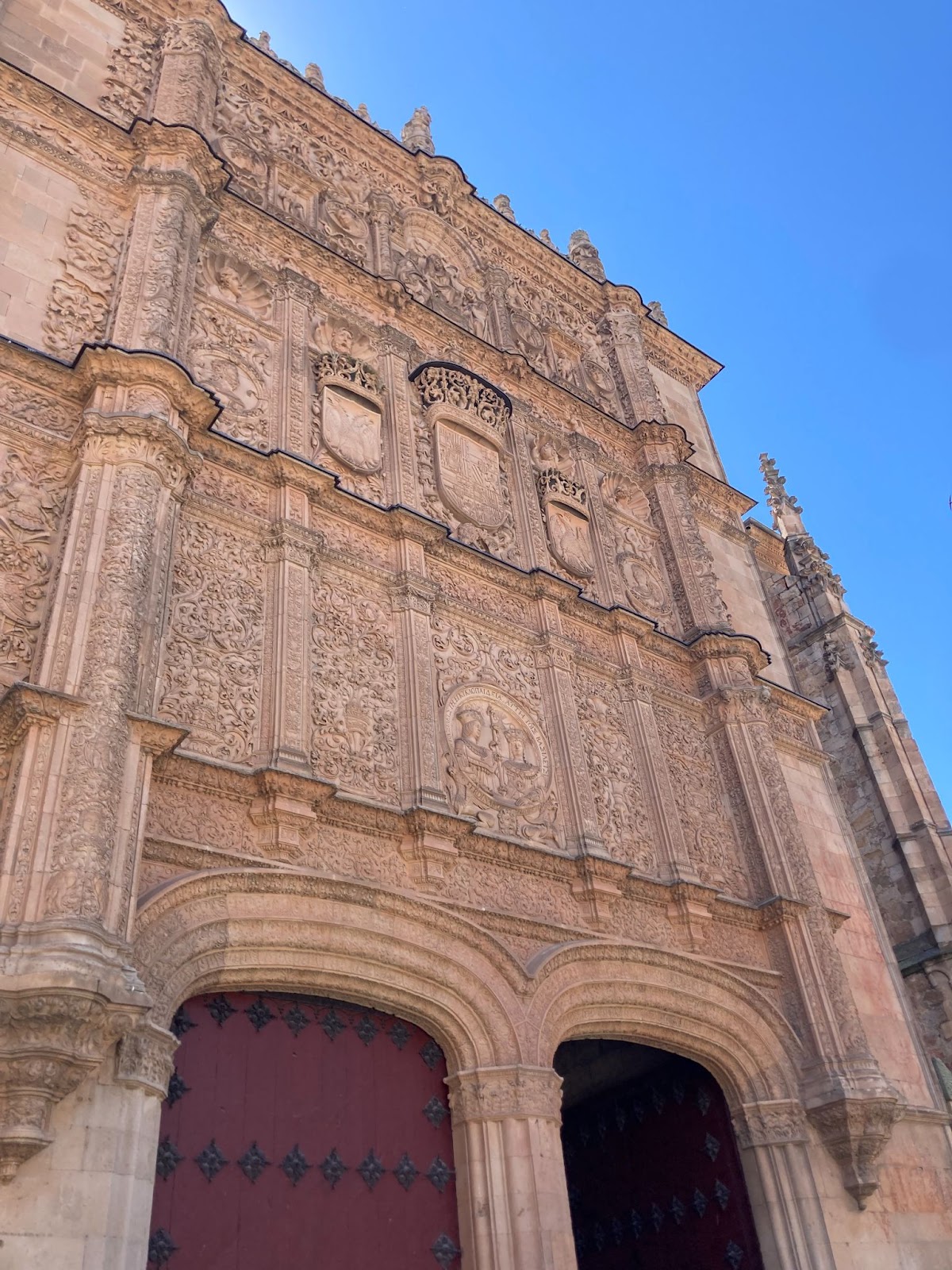
The next stop we made was at the library of the University of Salamanca. Interestingly, the outside of the library is covered in seashells. The official name of this structure is Casa de las Conchas. The shells symbolize the Order of Santiago and the pilgrimage to the shrine of the apostle St. James. The architecture is a mix of Gothic and renaissance styles to give the style plateresque. The windows show gothic ornate designs while the shells and walls are more simple and reflect the renaissance period. Next we tried to find the Frog of Salamanca! This was on one of the buildings of the university. It is said that finding the frog on this building brings one year of good luck! To Profe’s surprise, we found the frog within minutes! Next we broke for lunch which was much needed. We also used this time to rehydrate as it was the hottest time of the day in Salamanca.
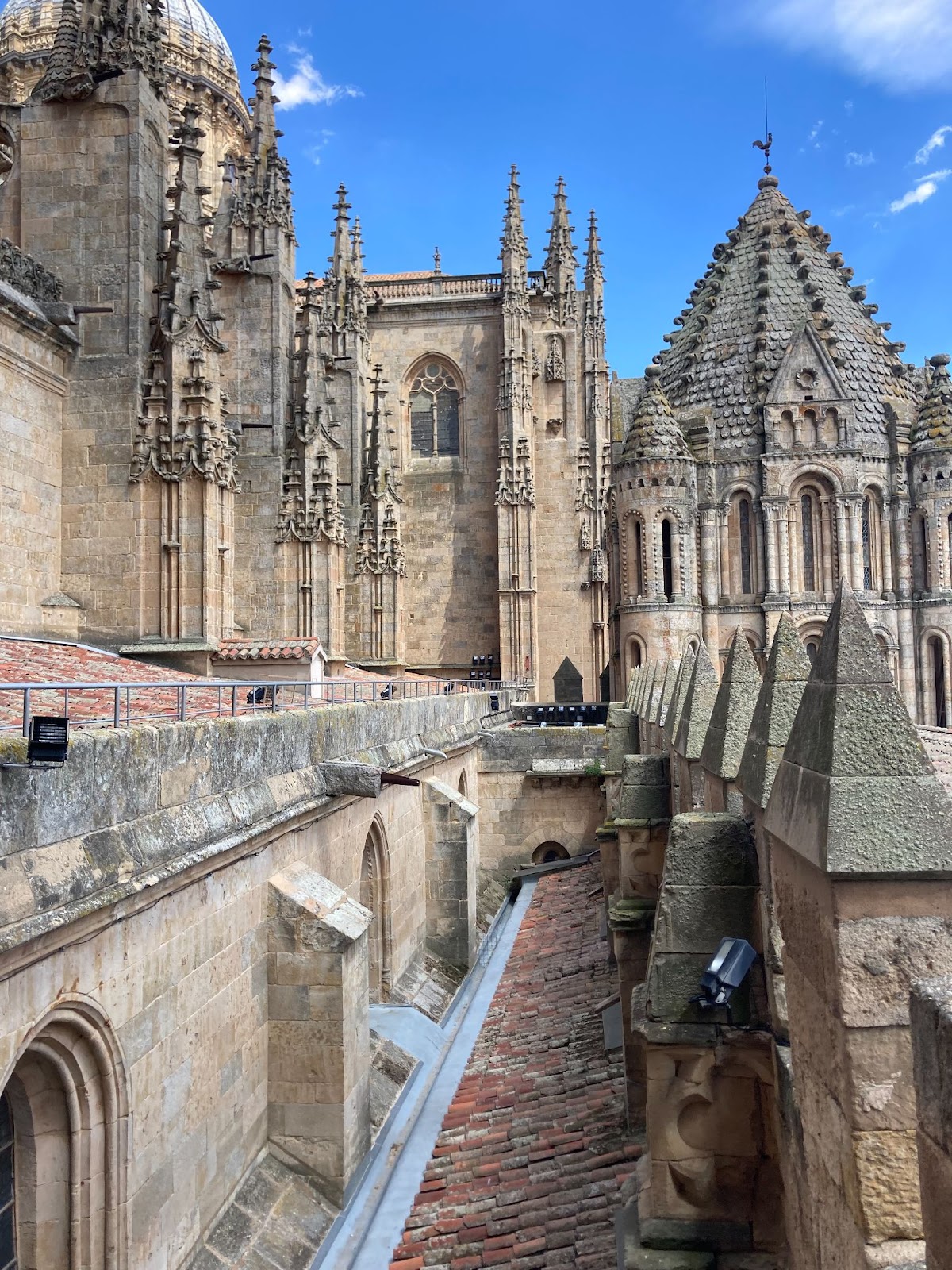
Once our batteries were recharged, we made our way to the Cathedral of Salamanca. This cathedral consists of two cathedrals: The old and new. They were made at different times so have two different architectural styles. The old cathedral was finished in the 14th century and has a typical mix of romanesque and gothic styles. It is fairly simple in design and is lower though it has some spires and decorations that hint at early gothic. The new cathedral was completed in the 16th century and has elements of the late gothic period as well as into the early renaissance. The gothic can be seen on any number of the spires with the ornate design. The renaissance is best seen on the bell tower with its very simple design with elements of gothic on the top. The bell also rang when we were on the top which gave us quite a scare! After that we made our way down and headed back to the train after quite a tiring day in Salamanca.