Written by: Alanya Telerski
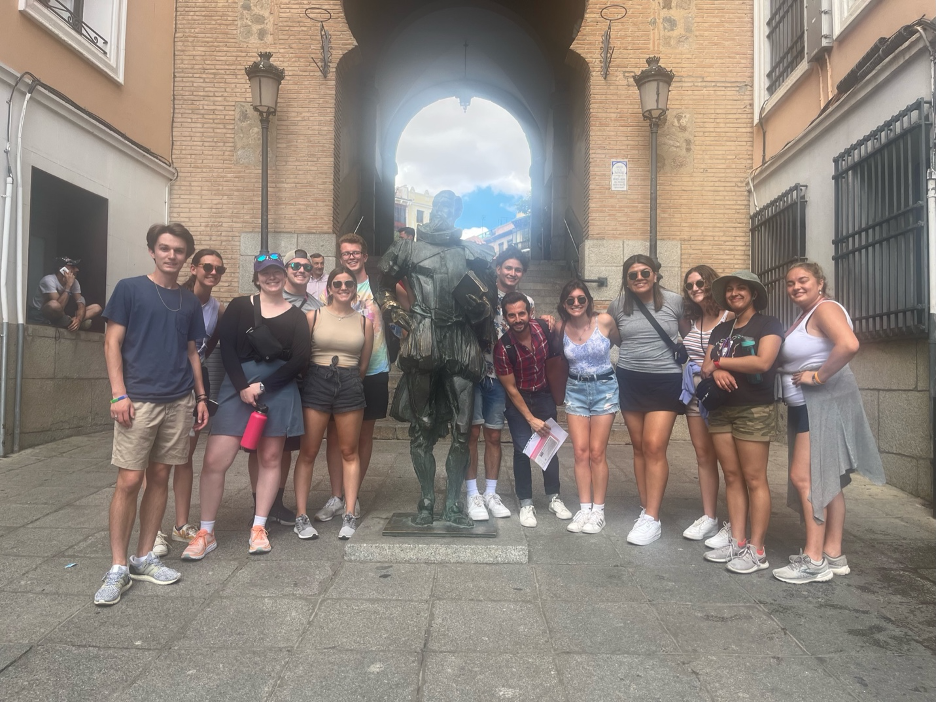
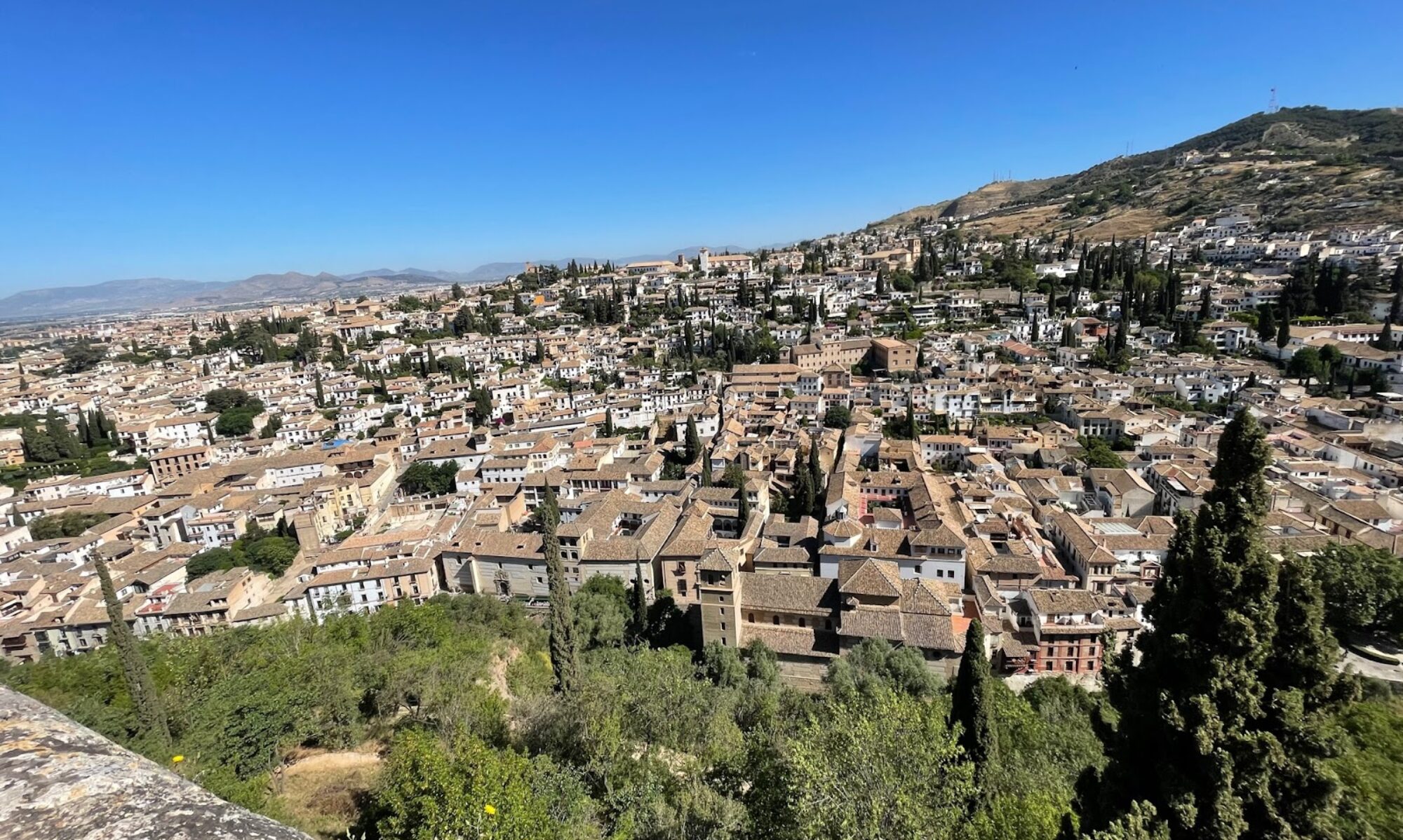
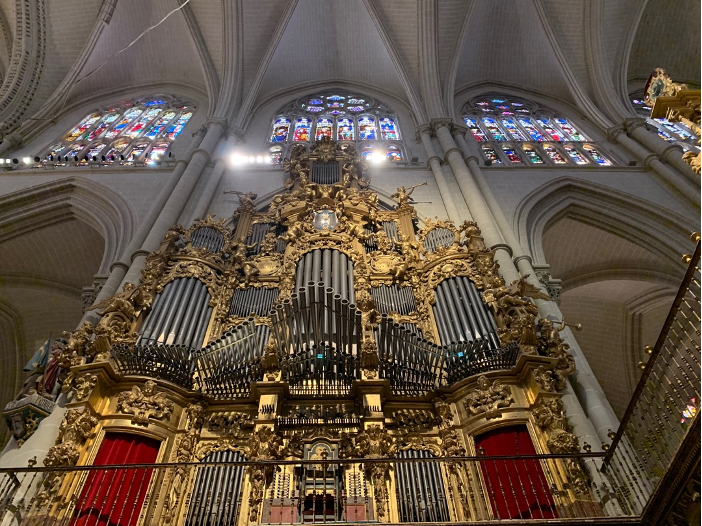
After a good breakfast and a short half hour train this morning, we headed off to spend the day in Toledo. After spending five days away while in Granada and Sevilla, I wasn’t convinced that one day was enough time in the city, but boy did our packed day prove me wrong. After ascending the major hill Toledo is built on, the first stop of the day was the Catedral de Toledo. The Primatial Cathedral of Saint Mary of Toledo is the second gothic cathedral that we have visited so far in Spain, and this one surely did not disappoint with its large, vaulted ceilings and extravagant stained-glass windows characteristic of the gothic style. We walked through the cathedral while listening to a very helpful audio guide that highlighted some of the most important aspects. My favorite part was being able to admire the many pipe organs on display. There were four major ones among the main altar and choir, and nearly ten organs in total.
After leaving the Cathedral we stopped for lunch at a local restaurant where I had some refreshing gazpacho while some of my classmates sampled venado (venison), a traditional Toledo dish. After lunch and some gelato, we went to La Sinagoga de Santa María La Blanca, El Monasterio de San Juan de Los Reyes, Mezquita Del Cristo De La Luz, and we even stopped into a Jesuit church along the way. Spain in general has a very nuanced religious history, so it was important to visit the locations in Toledo which best displayed the influences of Christianity, Judaism, and Islam. The synagogue and mosque were taken over and turned into Catholic churches soon after the 1492 fall of Granada, therefore visiting these sites reminds us of the important impacts that the Spanish Muslima and Jewish populations had on the country.
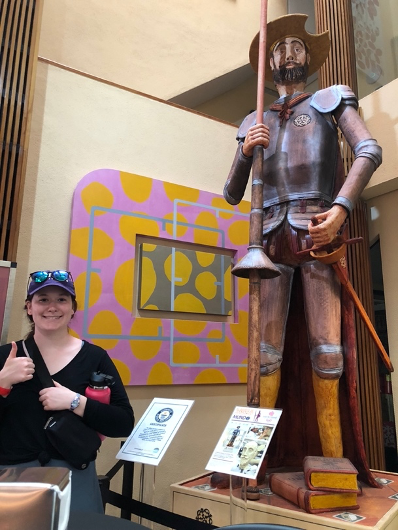
Just before hopping on the train back to Madrid, I made sure to try some of Toledo’s famous marzipan. While picking out some treats to enjoy on the ride home, we bumped into a statue of Cervantes made ENTIRELY OUT OF MARZIPAN. For all my fellow literature fans out there, Miguel de Cervantes wrote Don Quixote De Le Mancha, one of the most famous pieces of Spanish literature. Toledo is very proud of the fact that Cervantes and his wife lived in Toledo and has memorialized his work in various locations across the city.
In comparison to the other cities that we have visited so far, Toledo sticks out because of its rich history. Not only does Toledo display Spain’s nuanced religious history, but it also actively celebrates important Spanish contributions made in the 15th and 16th centuries. Generally, Toledo felt like a loving preservation of medieval Spain, maintaining, and celebrating influences by artists like El Greco and writers like Cervantes. Preserved upon a hill, Toledo served as the perfect example of how Spanish pride celebrates and honors its historical events and cultural influences.