
If you can imagine dripping through space, each drop a fiery star, swirling quickly past your field of vision and into a great overwhelming unknown, then you can imagine the sensations brought about by Voyager performed by the Semiosis Quartet in Brooks Music Hall. The full program, Florescence, takes on uniquely complicated scores, beginning with Chris Arrell’s Voyager. The composition is inspired by the Voyager mission, a program by NASA that launched two spacecrafts to record the stars in 1977 and have since been traveling through space, searching the vast unknown with our physical remnants of humanity launched along with it. The relationship between the space mission and Arrell’s response with a musical composition seems then only natural. Shot out into the darkness our voices, stories, and songs are carried, and with this hope or curiosity, Voyager reflects the human exploratory spirit. Art and sciences have a tendency to be separated, yet the Voyager space mission, and by extension Voyager, blends what might seem like two juxtaposing human interests into one holistic and universalizing experience.
The Boston-based Semiosis Quartet is a non-profit organization whose mission is to present contemporary works, emphasizing the non-traditional creativity of today. The style of the string quartet and the compositions may initially present as classical or traditional, yet the audience is met with technical evolution that is both dynamic and defiant. The rhythms and sounds, the narratives, and most notably, the techniques, take on new formations which bring attention to the creative musical innovators incorporating traditional string instruments while also exploring their wide possibility of sound. They collaborated with Holy Cross professors Chris Arrell and Mathew Jaskot, from the Department of Music, to perform several compositions including Florescence (Jaskot) for the very first time, and Voyager (Arrell) —the second performance since its debut just two days prior on February 8th.
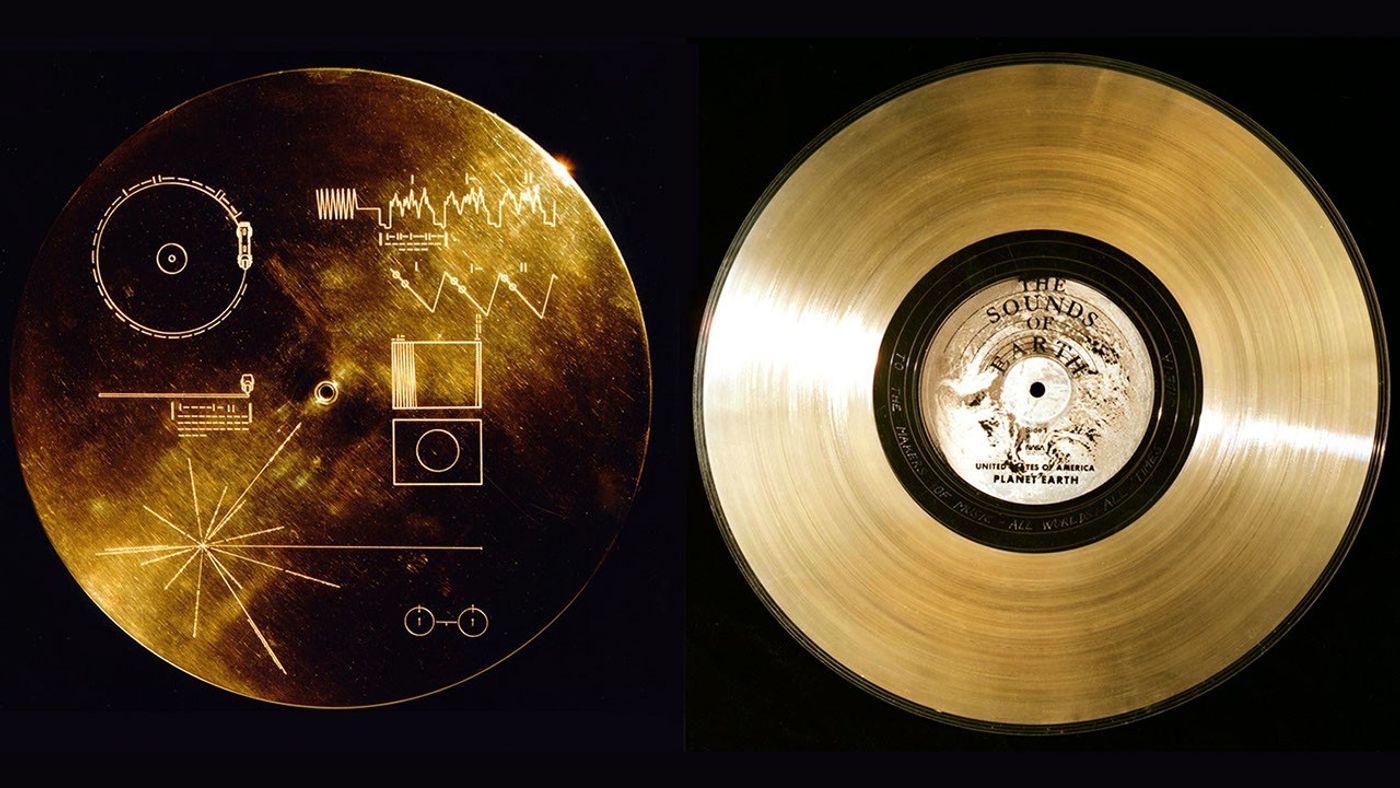
Before the concert began, Arrell spoke about his inspiration to translate the Voyager interstellar space mission into a musical piece. He spoke towards the vastness of space; the unknown darkness met with glittering constellations. In addition to Voyager collecting images of space and expanding our knowledge of the worlds beyond, we sent along within the spacecraft the Golden Record, a vinyl-like record etched with diagrams. We shot out into the galaxy a composition of our small human lives on Earth, with images, diagrams, and references to what one might see on Earth, like cities and animals and people. Most importantly, “The Sounds of Earth” records human voices in various languages greeting the universe, it also contains songs popular from the time and classical arrangements. The purpose of this record was to show any potential life forms in space what life on Earth is like. Through a combination of science and art, this mission is defining the human experience and literalizing universal experience.
With Arrell’s words in mind, the afternoon’s performance began with Voyager. The plucking strings sounded at first incoordinate, almost sterile and mechanical. The structure felt like a purely technical expression of music, yet perhaps something in the attitude of the Quartet, playful and precise, complicated the rigidity of each plucked string. The movement grew faster, filling up the space with sound and rhythms building off an entropy of chords mimicking what I can only imagine would feel like traveling through space. The rhythmic plucking of strings, like the rhythmic beeping from an interstellar space explorer, take you onto a journey.
The music bounces off the plucked strings, now mixing with fully drawn out sounds from the bows on strings, twinkling and rising to an upbeat pace and then falling intermittently. The music feels whimsical and exciting, and with each turn in the piece more unexpected than the last. Where one high pitched violin plucks, the cello contrasts the staccato notes with deep resonance and drawn out ones. As the piece progresses, the discordant tones find unity after some time. The fluctuations in tempo and energy create movement that mimics the sensation of traversing through space, past an ocean of constellations among a very vast darkness. Somehow along the way, the sounds began falling into synchronies responding to each other, the piece swelling, rising along with the movement and taking time to find their rhythm and unity as the piece progressed. There is wonder encapsulated in this journey, and awe in the ability to translate an intangible feeling and experience of going through the unknown realm of space into a real encapsulating musical simulation just in the Brooks Music Hall on College of the Holy Cross campus. As the music continues, one can only be reminded of the human effort and creativity it takes to make a composition, to make a spacecraft, and to challenge innovation out of pure human creative instinct.
Voyager brings out these feelings, emphasizing the thrill and wandering spirit when looking out to space. The name itself, Voyager, is a personification of exploration into the unknown spaces of the universe, carrying with it our memories and hopes to see the stars like never before. By bringing together the sciences and arts, Arrell’s piece successfully pays homage to one of the greatest technological and human efforts in history.